

The firmest suspension isn’t automatically the best choice for a road car. If you’re considering suspension upgrades in Reading, you may be weighing up whether springs, dampers or coilovers can improve handling without making everyday journeys uncomfortable. The right option depends on your car, the roads you use and how you want it to feel behind the wheel.
This guide explains what the common options change and the trade-offs to consider between comfort, control and everyday usability. It also covers why tyres and wheel alignment matter to the overall result, rather than treating suspension as an isolated upgrade.
Before arranging an installation, think about how you use your car and what you want to change. LA Car Hub is a Reading automotive centre offering performance upgrades and mechanical upgrade work. A clear set of priorities helps you plan a setup around your vehicle and driving needs, rather than choosing parts based on appearance or trends.
Key Takeaways
- Understand how springs, dampers and coilovers affect your car, and why adjustable options aren’t automatically the right fit.
- Compare comfort-focused, balanced road and performance-led priorities before choosing a setup.
- When researching “suspension upgrades Reading”, consider your regular journeys as well as occasional spirited or track driving.
- Plan around your car’s condition, your priorities and the components that suit its intended use.
- LA Car Hub carries out performance upgrades, including suspension component upgrades, in Reading.
Suspension upgrades in Reading: what can they change about your car?
A suspension upgrade changes components that influence how your car’s wheels move and how the body responds. Depending on the parts and setup, the aim might be more controlled cornering, a different ride height or a feel better suited to a particular kind of driving. Those aims aren’t interchangeable: a setup intended for occasional track use may feel tiring on everyday roads around Reading.
The result depends on the car’s design and condition, the components selected, the quality of the installation and how the complete setup works together. A firmer ride or lower stance isn’t automatically an improvement for a road car. The key question is whether the change supports your priorities without making regular journeys less comfortable or practical.
What does a car suspension system do?
Suspension allows the wheels to move over bumps and uneven surfaces whilst helping to support the car body. Springs compress and extend as the wheels travel; dampers control that movement so the car doesn’t continue bouncing after a bump. Together, these parts influence how impacts feel in the cabin and how settled the car feels when changing direction. For a wider overview, see Understanding Car Suspension Systems.
Suspension affects comfort, control and confidence, but it’s only part of the picture. Tyres, alignment and the condition of related components also influence how the car responds. A change to one part can alter how the rest of the setup feels, so consider upgrades as a whole rather than judging them by a single feature such as ride height.
When might a Reading driver consider an upgrade?
Start with a clear reason. Perhaps the car feels unsettled through corners, you want to change its ride height, or you’re preparing it for a specific use. Describe your regular journeys around Reading too, including the roads and surfaces you commonly drive. Daily road use and occasional spirited or track driving can call for different priorities.
An upgrade is different from replacing a worn or damaged component with a suitable replacement. If a spring or damper has deteriorated, restoring the car’s intended behaviour may be the immediate priority, rather than changing its character. Once the car’s condition is understood, you can consider whether a performance-focused change makes sense. LA Car Hub carries out performance upgrades, including suspension component upgrades, in Reading.
Springs, dampers and coilovers: how suspension upgrades differ
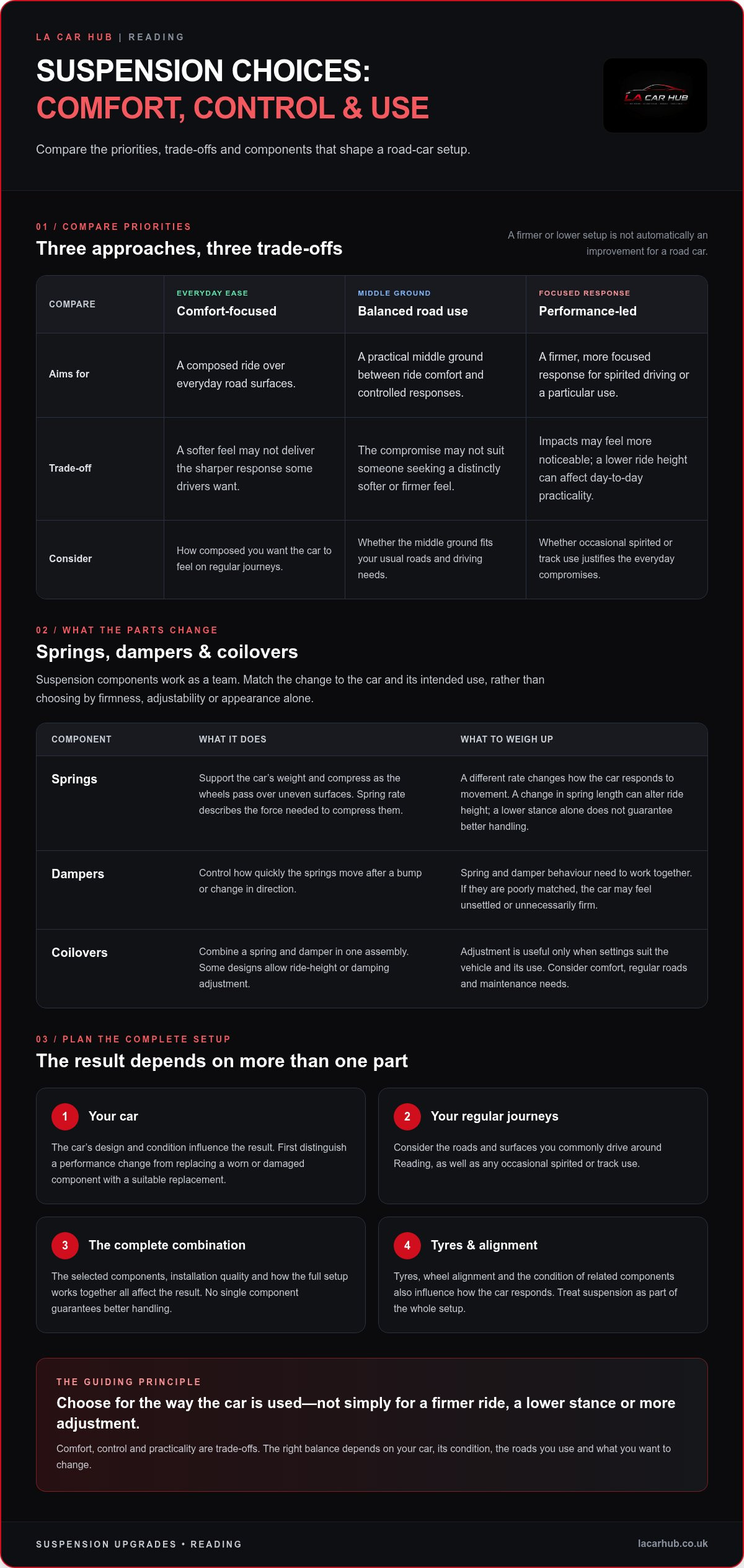
Suspension components work as a team, so choosing parts means more than selecting the firmest spring or the most adjustable kit. Start by understanding what each component changes, then match those changes to the car and its intended use. This is central to suspension upgrades Reading drivers consider for road cars that still need to feel comfortable on everyday journeys.
What do upgraded springs and dampers change?
Springs support the car’s weight and compress as the wheels pass over uneven surfaces. Their spring rate describes how much force is needed to compress them. A different rate can change how the car responds to movement, whilst a change in spring length can alter ride height. Lowering springs, for example, can reduce the gap between the body and wheels, but a lower stance alone doesn’t guarantee better handling.
Dampers control how quickly the springs move after a bump or change in direction. If the spring and damper behaviour aren’t well matched, the car may feel unsettled or unnecessarily firm. Replacing or upgrading one component can make sense in some setups, but the result depends on how it works with the rest of the suspension. Matching parts matters; no single component guarantees better handling.
Are coilovers right for an everyday road car?
Coilovers combine a spring and damper in one assembly. Some designs include adjustment options, such as changing ride height or damping. That flexibility can help tailor a setup, but adjustment isn’t a benefit by itself. The settings still need to suit the vehicle and how it’s driven.
For a road car, weigh up comfort on regular journeys, the roads you use, maintenance considerations and whether you’ll make use of the available adjustment. A straightforward spring or damper change may suit a clear, limited goal; a more adjustable arrangement may be relevant when the intended use calls for it. Neither option is automatically best for every driver.
Think through the whole upgrade rather than choosing by appearance or trend. LA Car Hub’s performance upgrades guide offers broader context for planning modifications. You can also explore LA Car Hub’s upgrade work in Reading.
Handling, comfort and ride height: weighing suspension upgrade trade-offs
A suspension setup involves choices, not a guaranteed improvement in every area. A firmer or lower car may feel more controlled to one driver, yet less comfortable on regular journeys. When considering suspension upgrades in Reading, compare each option against your car’s condition, usual routes and intended use.
| Priority | What the setup aims for | Trade-off to consider |
|---|---|---|
| Comfort-focused | A composed ride over everyday road surfaces. | A softer feel may not deliver the sharper response some drivers want. |
| Balanced road use | A practical middle ground between ride comfort and controlled responses. | The compromise may not suit drivers seeking a distinctly softer or firmer feel. |
| Performance-led | A firmer, more focused response for spirited driving or a particular use. | Impacts may feel more noticeable, and a lower ride height can affect day-to-day practicality. |
Will suspension upgrades make a car uncomfortable?
They can change comfort, particularly if the chosen setup uses firmer springs or lowers the car. The effect varies between vehicles. Road surfaces, tyre choice and the condition of existing components all shape what you feel in the cabin. A worn part can also affect the ride before you consider any upgrade.
Set comfort as a clear goal rather than assuming it must be sacrificed for sharper handling. Describe the journeys you make most often and how much firmness you’re willing to accept. That gives the setup a practical reference point alongside any handling or ride-height aim.
How do tyres and wheel alignment affect the result?
Suspension changes can affect how the car sits and responds through corners. Wheel alignment helps assess whether the wheels are set to appropriate angles for the changed setup. If alignment is overlooked, the car may not behave as intended, and tyre wear may be affected.
Tyres are part of the handling system, not an afterthought. Their condition and suitability influence how the car feels on the road, so consider them alongside suspension and alignment. The result depends on compatible components, the vehicle’s condition and how it’s driven. A setup for daily road use may involve different compromises from one intended for occasional track driving.
How to plan suspension upgrades for your car in Reading
A clear plan helps make an upgrade useful on everyday roads, not just appealing on paper. Before choosing parts, consider the car’s condition, how you use it and what you want to change. This gives a Reading-based specialist a practical starting point for discussing a setup that suits both vehicle and driver.
What should you decide before choosing suspension parts?
Note your car’s model and current setup, including any existing modifications. Think about typical passengers, regular journeys around Reading and the road conditions you encounter. Decide whether comfort, handling response, ride height or a balance of these matters most. Specific priorities are more useful than choosing parts because they’re popular online or look right on another car.
A practical planning process
- Define the use. Consider daily driving first, then account for occasional spirited driving or track use if relevant.
- Assess the car. Review existing wear or damage, current modifications and tyre condition before planning changes.
- Set priorities. Decide what you want the car to feel or do differently, and identify any comfort or practical limits.
- Select compatible components. Consider how proposed springs, dampers or other suspension parts will work with one another and the rest of the car.
- Review the finished setup. Include installation and a post-installation assessment in the plan, so you can consider the outcome against your original aims.
Each stage matters. Fitting new parts to a car with existing wear, for example, may not produce the feel you expect. Current modifications and tyres can also influence the result, so plan for the whole vehicle rather than treating suspension in isolation.
Build roadworthiness and applicable UK requirements into the planning process, and ensure the proposed changes are appropriate for the car’s intended use. For a wider view of how modifications can fit together, read this car tuning guide for Reading.
LA Car Hub carries out performance upgrades, including suspension component upgrades, in Reading. Find out about suspension upgrades at LA Car Hub and consider how the work can fit your car and driving priorities.
Suspension upgrades in Reading: from choosing a setup to next steps
A suitable suspension setup starts with the car, your priorities and how you intend to use it. Sharper responses or a different ride height may be part of the goal, but daily comfort and practical use matter too. There isn’t one suspension setup that suits every vehicle or journey.
What happens when you discuss a suspension upgrade?
A useful conversation starts with the vehicle and its current setup. Share the make and model, any existing modifications and what you’d like to change about the way the car feels. For example, you might want it to feel more settled through corners whilst keeping everyday journeys comfortable, or you may have a specific ride-height aim.
These details give you a practical starting point for planning the work. LA Car Hub is a Reading automotive centre that carries out performance upgrades, including suspension component upgrades. Consider the individual car and its intended use rather than assuming the same parts or priorities suit every vehicle.
How can you move forward with a considered setup?
Before discussing the project, gather a few useful details:
- Your car’s make, model and current suspension setup.
- Any existing modifications or concerns about the car’s condition.
- The journeys you make regularly, including typical road conditions and passengers.
- Your main priority: comfort, handling response, ride height or a balance of these.
A clear description keeps the discussion grounded in how you actually drive. Be candid about compromises too. If the car is used every day, explain how much firmness you’re comfortable with; if you’re planning occasional spirited or track driving, include that in the intended use. Comfort and handling goals should guide the parts and setup discussion, not appearance alone.
LA Car Hub’s performance upgrade work includes suspension component upgrades and wider mechanical upgrade work. A considered plan gives you a clearer basis for deciding which direction fits your vehicle, without assuming a particular change will deliver the same result on every car.
To discuss a suspension upgrade for your car, explore performance upgrades at LA Car Hub.
Make your next suspension upgrade work for you
The best suspension setup isn’t simply the firmest or lowest. Start with your car’s condition, the way you drive and what matters most, whether that’s everyday comfort, more controlled handling or a particular ride height. Springs, dampers and coilovers offer different approaches, and the right choice depends on how the components work with your tyres and alignment.
For suspension upgrades Reading drivers are considering, keep regular journeys in mind alongside any spirited or track use. A clear set of priorities makes it easier to plan around real needs rather than appearance alone.
LA Car Hub is a Reading-based automotive centre offering performance and mechanical upgrades. To discuss your suspension upgrade plans, contact LA Car Hub about performance upgrades.
Frequently Asked Questions
Do suspension upgrades improve handling on a road car?
They can change how a road car responds, but the result depends on the parts, the vehicle’s condition and how the setup is matched. Firmer components may make responses feel more controlled, but they won’t automatically improve grip or suit every road. Tyres and wheel alignment also affect handling. Start by identifying what feels lacking, such as unsettled cornering, then consider whether an upgrade addresses that specific concern.
Can suspension upgrades make a car ride too harsh?
Yes, a setup can feel too firm for your needs, particularly if it uses firmer springs or a lower ride height. The effect varies with the car, road surfaces, tyre choice and the condition of existing components. Explain how you use the car and how much comfort matters when planning the upgrade. A clear comfort goal can help guide component choices and the overall setup.
What is the difference between lowering springs and coilovers?
Lowering springs replace the car’s existing springs to change ride height and spring behaviour. They’re a component change, rather than a combined spring-and-damper assembly. Coilovers bring a spring and damper together, and some designs offer adjustments such as ride height or damping. That flexibility can suit particular needs, but neither option is automatically better. The right choice depends on the vehicle, compatible components and intended use.
Are coilovers suitable for everyday driving?
Coilovers can be used on an everyday car, but suitability depends on the particular components and how they’re set up. Consider ride comfort on your regular journeys, how much you’ll use any adjustment options and maintenance as part of the decision. A setup aimed at spirited or track driving may involve different compromises from one intended for daily road use. Match the choice to how you actually drive.
Do I need wheel alignment after a suspension upgrade?
Wheel alignment should be considered after suspension changes because the work can affect how the car sits and how its wheels are positioned. Correct alignment helps the vehicle respond as intended and can help avoid uneven tyre wear. The appropriate checks depend on the work carried out and the vehicle. Include alignment in the upgrade plan rather than treating it as an unrelated extra after the suspension has been changed.
Can I upgrade only the springs or dampers on my car?
In some setups, changing just the springs or just the dampers may be appropriate, but the parts need to work together. A spring affects how the car supports its weight and moves; a damper controls that movement. Changing one without considering the other can produce a result that doesn’t suit the car or your goals. Assess the vehicle’s condition and existing components before deciding whether a single-part change makes sense.
How do I choose suspension upgrades for my driving style in Reading?
If you’re searching for “suspension upgrades reading”, begin with your car and the journeys you make around Reading. Note the vehicle’s current setup, existing wear, tyre condition and any modifications. Then set your priorities: comfort, handling response, ride height or a balance. Include occasional spirited or track driving if relevant, but keep daily use in view.


