
The biggest upgrade isn’t always the best first move. A search for car tuning reading options can bring up everything from an ECU remap to suspension or other hardware changes. The right choice depends on your car, its condition and how you use it.
It’s understandable to want more from your car while keeping it comfortable and dependable for everyday driving. Remapping and mechanical upgrades work in different ways, and each has practical trade-offs. LA Car Hub is a Reading-based automotive centre offering performance modifications and suspension upgrades, with the work shaped around the vehicle and the driver’s intended use.
This guide compares the main tuning routes, explains how software changes differ from supporting hardware, and sets out what to consider when balancing performance, drivability and reliability. It also covers what to prepare before planning a project, including how you drive around Reading and what you want your car to do differently. Use these points to compare options on their practical merits, rather than choosing an upgrade simply because it promises more power.
Key Takeaways
- Start with what you want your car to do differently, whether that’s sharper response, better handling or a refreshed appearance.
- Compare remapping, suspension upgrades and other mechanical modifications by their purpose, complexity and effect on everyday driving.
- Use your car’s condition, existing modifications and intended use to narrow down suitable car tuning reading options.
- Weigh potential performance benefits against comfort and maintenance considerations, and include insurance disclosure in your planning.
- LA Car Hub’s Reading-based team carries out mechanical upgrades and performance modifications with your driving goals in mind.
Car tuning in Reading: start with your car's purpose
Car tuning means making changes to a vehicle to alter its performance or behaviour. Put simply, tuning changes how a car performs; routine maintenance keeps it in its intended working condition. Modifications might aim for sharper response, more composed handling, better suitability for track use or a refreshed appearance. A Car tuning overview shows how broad the subject is, spanning engine, suspension and styling changes.
There isn’t one upgrade that suits every car. The model, engine and existing components affect which modifications are appropriate, while the vehicle’s condition and your intended use help set priorities. A car used for a daily commute around Reading has different demands from one driven mainly for occasional spirited trips or track days. If you’re comparing car tuning reading options, start with the purpose, not a headline power figure.
Which tuning goal matters most for your car?
Rank what matters to you: response, handling, sound, appearance and everyday usability. If the car is mostly used for commuting, comfort and predictable behaviour may matter more than a sharper, track-focused set-up. For occasional spirited driving, you might put handling higher on the list. Track-day priorities can differ again, particularly if the car still needs to be practical on the road between events.
Use that order to guide decisions about upgrades. A modification should support your chosen goal, not simply chase a number or a fashionable part. Being clear about how often you drive, where you drive and what you want to feel behind the wheel makes it easier to compare options and their trade-offs.
Why the starting condition of the car matters
An upgrade can’t compensate for an existing fault. A warning light, unusual noise, worn component or overdue maintenance may affect how the car behaves and undermine the result of planned work. That doesn’t mean every vehicle needs repairs before it can be modified. It means your plans should take the car’s actual condition into account.
Before discussing changes, note any known issues and gather the car’s model, condition, service history and existing modifications. Where appropriate, an inspection or diagnostics can help identify issues before components are changed. This information gives the upgrade discussion useful context and helps keep proposed work relevant to the vehicle and its intended use.
Remapping or mechanical upgrades: compare the main car tuning options
Remapping changes engine-management software, while suspension and other mechanical upgrades alter physical parts of the car. Neither route is automatically the right choice. The vehicle, its condition and your intended use all matter. Use this comparison to narrow down what to explore as part of your car tuning reading research.
| Option | Intended result | Suitability and complexity | Everyday-use considerations |
|---|---|---|---|
| Remapping | Adjust engine-management settings to change how the engine responds. | Suitability depends on the vehicle’s software, specification and condition. The work is software-focused, but still requires vehicle-specific consideration. | Any change in response or behaviour should suit how you use the car, not just occasional track driving. |
| Suspension upgrades | Alter handling characteristics and how the car feels through corners. | Involves suspension components and their fitment. The right approach depends on the car and the balance you want. | A set-up aimed at sharper handling may change ride comfort, which matters on everyday roads. |
| Other mechanical modifications | Address a particular performance or driving goal by changing relevant components. | Scope and fitting requirements vary with the parts involved and the vehicle. | Consider how the change works with existing components and whether the car remains practical for regular use. |
What does remapping change?
A remap alters settings in the engine-management software, which controls aspects of engine operation. Its effects vary between vehicles, so there’s no universal promise of a particular performance or economy outcome. The car’s specification and condition help determine whether a software change is suitable. For a broader look at the topic, the Specialty Equipment Market Association provides background on the automotive aftermarket.
When might suspension or other mechanical upgrades suit you?
If your priority is how the car behaves through corners, suspension changes may be more relevant than software tuning. Other mechanical modifications involve different components and fitting requirements, so compare the intended benefit with possible effects on comfort and daily usability. LA Car Hub carries out mechanical upgrades and performance modifications, with the work shaped around the project. Read our performance upgrades guide for Reading for more help weighing up options.
For a practical discussion about performance upgrades for your car, explore LA Car Hub’s tuning work.
Will car tuning affect reliability, insurance or everyday driving?
Tuning isn’t automatically unsuitable for a road car, but it changes the balance the manufacturer designed. The effect depends on the vehicle, its condition, the components changed and how the work is carried out. A modification that suits occasional track use may feel less comfortable or convenient on a daily commute. Think through those trade-offs before deciding, rather than assuming every upgrade will reduce reliability or improve performance.
How can modifications change everyday drivability?
Changes can affect more than outright performance. Suspension alterations may affect ride comfort and steering feel, while other modifications can change noise or how a car behaves at low speeds. The result depends on the parts and set-up, so it won’t be the same for every vehicle.
Consider your usual passengers and journeys as well as track-day plans. If you regularly drive on uneven roads, carry passengers or spend time in stop-start traffic, think about whether a firmer ride, extra noise or a different response would still suit your routine. A clear goal helps you weigh the intended benefit against the compromises you’ll notice most often.
What should drivers consider about insurance and road use?
Tell your insurer about modifications and follow its current instructions. Don’t assume a change is too minor to mention: insurers set their own policy requirements, and the effect on cover can depend on the modification and your policy. Keep a clear record of the work and relevant vehicle details so you can describe the changes accurately.
Roadworthiness and emissions considerations depend on the vehicle and the work carried out. Before using a modified car on public roads, check current UK guidance relevant to those changes rather than relying on general advice. For structural work, GOV.UK explains the rules for structurally modified vehicles, including when the DVLA must be notified. That guidance relates to structural modifications, so it isn’t a complete guide to every type of tuning.
For car tuning Reading drivers can use on both road and track, the practical question is how each modification fits the car’s condition and intended use. Discuss those priorities before work begins, including how the car is maintained and what compromises you’re prepared to accept. This makes it easier to consider drivability, upkeep and the requirements that apply to your vehicle.
How to plan a car tuning project in Reading
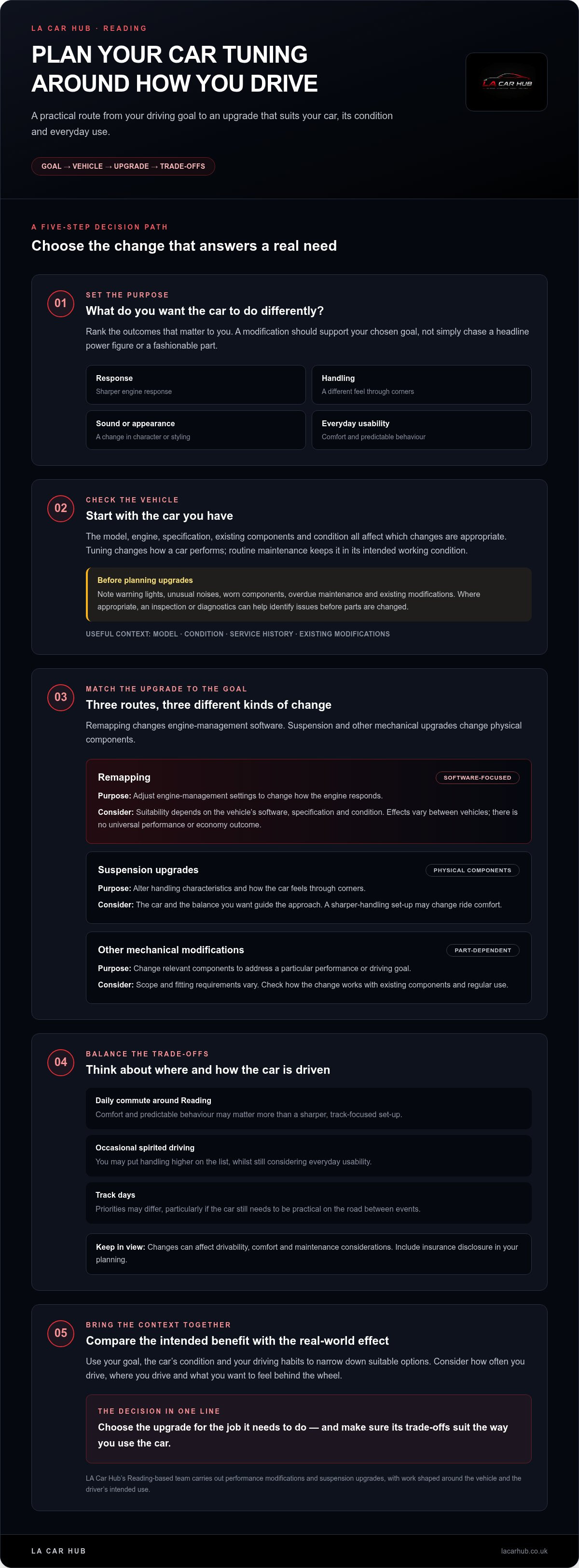
A clear plan helps turn an idea into upgrades that suit both the car and the way you use it. Before arranging car tuning in Reading or nearby Berkshire, gather the relevant vehicle information and decide what you want to change. Then assess each proposed modification against that goal.
- Define the goal. Be specific about what you want to feel or do differently. For example, you might prioritise sharper handling for occasional track days while keeping the car comfortable for your commute.
- Record the vehicle details. Note the make, model, year and engine details, along with any existing modifications. This gives the upgrade discussion useful context.
- Describe the car’s current condition. Mention warning lights, running issues, unusual behaviour or maintenance concerns. These details help establish whether the car’s starting condition should be addressed before planning changes.
- Explain how you use the car. Include typical journeys, passenger use and how often you expect to drive on track. A road-focused car and a track-day car may call for different compromises.
- Review the proposed work. Check that every modification supports your goal, understand the work involved and consider the trade-offs before settling on a plan.
What to prepare before discussing upgrades
Bring together the vehicle details, a list of current modifications and a straightforward description of what you’d like to improve. Include known faults or maintenance needs rather than leaving them out; they help build an accurate picture of the car. You don’t need to arrive with a technical solution already chosen. A clear description of your goal is a more useful starting point.
How to assess a proposed tuning plan
Look at each item in the plan and ask: what is it intended to change, how does it support my goal, and what might I notice day to day? A plain-English explanation should make the components and fitting work understandable, along with any likely compromise in comfort or usability. Consider whether the plan fits your actual road and track use, not just an idealised version of it.
At LA Car Hub, performance modifications and mechanical upgrades are approached with the driver’s intended use in mind. If you’re ready to discuss a suitable direction for your car, talk to LA Car Hub about your tuning project.
LA Car Hub Reading: from upgrade choice to expert fitting
Choosing an upgrade is only part of a tuning project. The modification needs to make sense for the car, its condition and the way you plan to use it. LA Car Hub is a Reading-based automotive centre carrying out mechanical upgrades, suspension upgrades and performance modifications. For drivers weighing up car tuning Reading options, the aim is to connect the desired change with work suited to the vehicle, rather than start with a generic parts list.
What a considered upgrade discussion should cover
A useful conversation begins with the car itself: its make and model, existing modifications, current condition and any known running concerns. From there, explain what you want to change. That might mean exploring suspension modifications for handling or discussing other mechanical upgrades to support a particular performance goal.
Be open about regular use, too. A car driven to work and used for occasional track days has different demands from one mainly prepared for circuit use. LA Car Hub carries out mechanical upgrades and performance modifications with those demands in mind, including the work involved and practical considerations for your intended use. The business cites more than 10 years of operational experience.
Keep the focus on the reason for each proposed change. If an upgrade doesn’t clearly support your stated goal, make sure you understand why it’s being considered and what trade-offs may come with it. A grounded plan takes the specific vehicle into account instead of assuming the same modifications suit every car.
Take the next step with a Reading tuning specialist
Before getting in touch, gather the vehicle’s make, model, year and engine details, plus a list of existing modifications. Note how you use the car, what you’d like to improve and any warning lights, faults or maintenance concerns you already know about. You don’t need to arrive with a finished specification. A clear picture of the car and your priorities is enough to start a practical discussion.
LA Car Hub carries out upgrades and tuning in Reading, including mechanical and suspension modifications. Share your plans for road or track use, and the team can discuss the work in relation to your vehicle and goals. If you’re considering a performance upgrade, get in touch with LA Car Hub to discuss your tuning project. You can talk through what you want from the car before settling on a modification.
Choose an upgrade that fits the way you drive
The right tuning project starts with a clear goal, not a headline figure. Remapping, suspension changes and other mechanical upgrades each affect the car differently, so consider its condition, your regular journeys and whether you’ll use it on track. This practical approach helps you weigh potential benefits against comfort, maintenance and everyday usability.
For car tuning Reading drivers can plan around their needs, LA Car Hub offers mechanical upgrades, performance modifications and suspension upgrades from its Reading automotive centre. A considered discussion can connect what you want to change with options suited to your car and how you use it.
Have your vehicle details, existing modifications and intended use in mind, then discuss your performance upgrade plans with LA Car Hub. Start with what matters most to you and your car.
Frequently Asked Questions
What does car tuning involve?
Car tuning involves changing a vehicle to alter its performance, handling, sound or appearance. The work might include remapping the engine-management software, upgrading suspension components or fitting other mechanical modifications. The right option depends on the car, its condition and how you plan to use it. Start by identifying what you want to change, then compare possible upgrades by their practical effects, complexity and suitability for everyday driving.
Is remapping the same as car tuning?
No. Remapping is one type of car tuning, focused on changing settings in the engine-management software. Tuning is a broader term that can also include suspension upgrades and other mechanical modifications. A remap’s effects vary by vehicle and condition, so don’t assume it will deliver a particular result. If your priority is handling rather than engine response, a mechanical or suspension upgrade may be more relevant to explore.
Can car tuning affect reliability?
It can, but the effect depends on the vehicle, its condition, the modifications and how the car is used. Tuning isn’t automatically unsuitable for a road car, though changes may affect maintenance needs or place different demands on components. Before planning upgrades, note any known faults or warning lights and consider the car’s maintenance history. A vehicle-specific discussion can help you weigh the intended benefit against possible compromises.
Do I need to tell my insurer about car modifications in the UK?
Yes. Tell your insurer about modifications and follow its current instructions. This includes changes such as remapping, suspension alterations or exhaust modifications, as the insurer’s requirements depend on your policy and the work carried out. Don’t assume a change is too small to mention. Keep a record of the modifications so you can describe them accurately, and check how they affect your cover before driving the modified car.
Can a tuned car still be used on public roads?
A tuned car may still be used on public roads if it remains roadworthy and meets the requirements that apply to the vehicle and modifications. The implications depend on the work carried out, including any potential effect on emissions or structural features. Check current UK guidance relevant to your specific changes, and tell your insurer about the modifications. Track suitability alone doesn’t establish whether a car is suitable for road use.
How do I choose between remapping and suspension upgrades?
Choose based on the change you want. Remapping alters engine-management settings and may be relevant if your priority is engine response. Suspension upgrades change handling characteristics and may suit a driver focused on cornering feel or track use. Consider the car’s specification and condition, then balance the intended benefit against comfort and everyday usability. A clear description of your regular driving helps keep the choice grounded in real use.
Where can I discuss car tuning in Reading?
LA Car Hub is a Reading-based automotive centre offering performance modifications, mechanical upgrades and suspension upgrades. If you’re exploring car tuning Reading options, have your vehicle’s make, model, year and engine details ready, along with a list of existing modifications. It also helps to explain how you use the car, what you’d like to change and any known issues. That gives the tuning discussion a practical starting point.


