
The upgrade that adds the most power isn’t always the one that makes your car better to live with. If you’re considering performance upgrades Reading drivers need to ask the same key question: will the change work with the whole car and suit everyday use?
It’s worth looking beyond headline gains. A remap, suspension change or other aftermarket component can affect how a car feels. Reliability, comfort, MOT requirements and insurance also deserve consideration. The right choice depends on your vehicle, your priorities and how you drive.
This guide compares common performance upgrades and explains their practical benefits and trade-offs, so you can plan a setup with fewer surprises. It also covers UK road-use considerations, including telling your insurer about modifications. LA Car Hub carries out performance upgrades and tuning at its Reading automotive centre, including fitting aftermarket performance and suspension components. The team can discuss your aims and your vehicle’s requirements before work begins.
Key Takeaways
- Decide what you want to change, then match upgrades to your car’s condition and how you use it.
- Compare tuning, exhaust and suspension options by their likely benefits and compromises, rather than assuming one setup suits every vehicle.
- Consider comfort, noise, wear and everyday drivability as well as performance before choosing a modification.
- When planning performance upgrades in Reading, record existing modifications and maintenance concerns, then consider compatibility and installation.
- Factor road-use, MOT and insurance requirements into your plans. LA Car Hub carries out upgrades and tuning in Reading.
Performance upgrades in Reading: define your car's goals
What would you most like to change: acceleration, cornering, sound or appearance? That’s a more useful starting point than choosing a part because it suits another car. The right performance upgrades Reading drivers consider depend on the vehicle, its condition and how it will be used, as well as the result they want.
A road car used for commuting needs to remain comfortable and predictable in everyday traffic. A track-focused setup may prioritise sharper responses during hard driving, but changes intended for that environment can bring compromises on ordinary roads, such as a firmer ride or more noise. Think about where the car spends most of its time before deciding which trade-offs are acceptable. The broad areas of modification, from engine and suspension to bodywork, are outlined in Car tuning.
Match the upgrade to your driving goals
If stronger acceleration is your aim, engine tuning or other power-related changes may be worth considering. Plan them with the vehicle’s supporting systems in mind rather than treating them as an isolated improvement. Suspension changes can influence handling, but the right balance depends on the roads you use and how much ride comfort matters to you. Cosmetic changes are a separate choice and shouldn’t be confused with modifications intended to alter performance.
Set a realistic starting point for your car
Before planning work, take stock of the car’s age and condition, its service history and any modifications already fitted. A change that suits one model may not suit another, because vehicles differ in design, existing components and condition. Record what you know about the current setup, including any maintenance issues, to make the next decision more informed.
Describe your typical use plainly: regular journeys, occasional spirited driving or track use. A car that spends most of its time on local roads may need a different balance from one prepared mainly for circuit sessions. LA Car Hub’s Reading team can discuss your aims and vehicle-specific requirements as part of its performance upgrades and tuning work.
In short: define the goal, assess the car, then compare options that suit the vehicle and intended use. This gives you a practical basis for weighing performance against comfort and everyday drivability.
Performance upgrades explained: tuning, exhausts and suspension
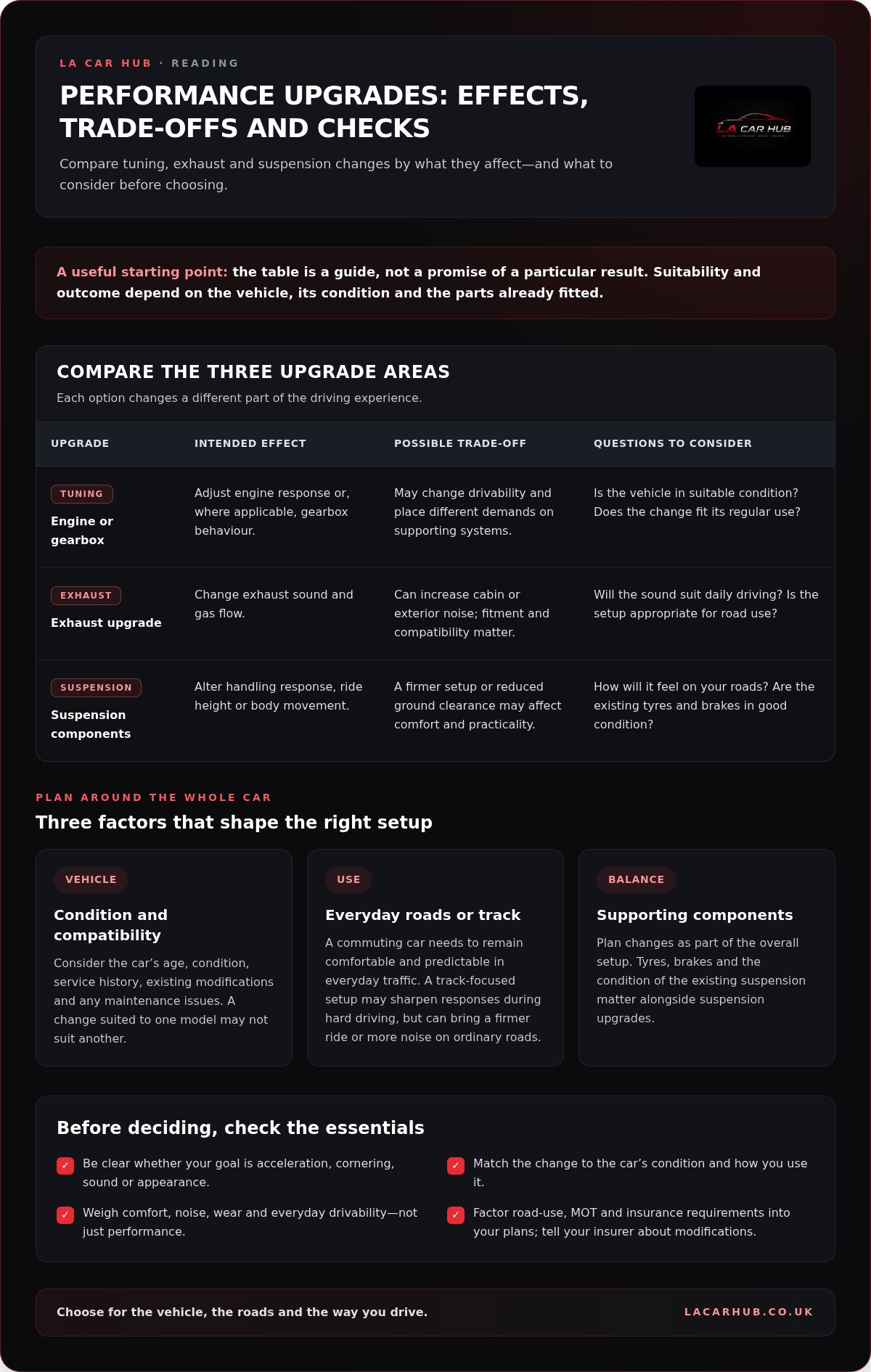
Different modifications affect different parts of the driving experience. Engine tuning changes how the engine responds; exhaust work alters the system that carries gases away; suspension changes how the car meets the road. The table below is a starting point, not a promise of a particular result. Suitability and outcome depend on the specific vehicle, its condition and the parts already fitted.
| Modification | Intended effect | Likely trade-off | Questions to consider |
|---|---|---|---|
| Engine or gearbox tuning | Adjust engine response or, where applicable, gearbox behaviour | May change drivability and place different demands on supporting systems | Is the vehicle in suitable condition, and does the change fit its regular use? |
| Exhaust upgrade | Change exhaust sound and gas flow | Can increase cabin or exterior noise; fitment and compatibility matter | Will the sound suit daily driving, and is the setup appropriate for road use? |
| Suspension components | Alter handling response, ride height or body movement | A firmer setup or reduced ground clearance may affect comfort and practicality | How will it feel on the roads you use, and are the existing tyres and brakes in good condition? |
Tuning and exhaust modifications: what changes?
Engine tuning involves adjusting how the engine is managed, often through its electronic control unit (ECU). Gearbox tuning, where suitable, adjusts transmission behaviour. These software changes are distinct from mechanical work such as replacing exhaust or suspension components. An exhaust change may affect sound and flow, but fitment and the vehicle’s existing setup influence what can be achieved. Neither type of modification guarantees a particular performance gain. Consider road-use requirements for the specific vehicle and proposed setup.
Suspension and supporting modifications
Suspension components influence how the car responds through corners and over uneven surfaces. Changes may sharpen the handling feel, but can also make a car less comfortable on rough roads or alter its ground clearance. Tyres, brakes and the condition of the existing suspension matter too. Plan an upgrade as part of the vehicle’s overall setup, not in isolation. For changes that affect the vehicle’s structure, read the GOV.UK guidance on structurally modified vehicles.
For a closer look at suspension choices, explore our related guide to suspension upgrades. LA Car Hub installs aftermarket performance and suspension components as part of its performance upgrades in Reading. Explore LA Car Hub’s upgrade and tuning work.
Will performance upgrades affect reliability, comfort or road use?
A part can fit physically without being the right choice for the car. Compatibility is only one part of the decision: the vehicle’s condition, how components work together and the demands of everyday driving all matter. Modifications don’t automatically damage reliability, but poor suitability, existing faults or a setup that places extra demands on other systems can affect how a car behaves and wears over time.
Balance performance gains with daily comfort
A firmer suspension setup may feel more direct through corners, yet make potholes and uneven surfaces more noticeable on regular journeys. A louder exhaust may add the sound you want, but become tiring on longer trips or with passengers. There’s no single comfort threshold that suits everyone, so consider your usual routes and how you use the car, not just how a modification feels on a short drive.
Plan upgrades in stages. Prioritise the change that addresses your main aim, then consider how it affects the rest of the car before adding more. Changing several systems at once can make it harder to judge what has improved, what has become less comfortable and where extra wear may be coming from.
Check road-use and insurance implications
Road-use rules depend on the modification and the vehicle. Changes must not leave a car below the emissions standards it was approved to meet. Removing or tampering with a catalytic converter or diesel particulate filter can lead to an MOT failure. Exhaust noise, component condition and safety also matter. Check current GOV.UK MOT inspection guidance for the relevant requirements rather than assuming that an upgrade is acceptable simply because it’s fitted.
Some vehicle changes may also have DVLA implications. GOV.UK explains the process for changes to your vehicle, including relevant structural modifications. Read the guidance for the specific work being considered, as not every performance part has the same registration implications.
Tell your insurer about modifications and follow your policy’s requirements for declaring them. Keep a clear record of what has changed, including parts fitted and any existing modifications. A record gives you an accurate basis for discussing cover and helps you keep track of the vehicle’s setup.
When considering performance upgrades Reading drivers should weigh the intended benefit against comfort, noise, wear and road-use requirements. LA Car Hub carries out performance upgrades and tuning with the vehicle and its intended use in mind.
How to plan performance upgrades for your Reading car
A considered plan connects the change you want with the car you have. Before selecting parts or tuning, record what’s already fitted, how the vehicle is maintained and any issues that need attention. This gives you and the workshop a clearer starting point, particularly if you’re combining changes to power, handling or appearance.
A sensible order for planning modifications
- Define the use. Note whether the car is mainly for regular journeys, occasional spirited driving or track days. Your intended use helps set priorities.
- Assess the vehicle. Consider its age, condition, service history and current maintenance needs. Addressing an existing concern may be more useful than adding a performance part.
- List existing changes. Record modifications already fitted, including any details you have about them. This helps build a complete picture rather than planning each change in isolation.
- Consider the supporting systems. A power change may affect what the engine and related components need to cope with. Consider handling changes alongside the condition of the tyres, brakes and suspension.
- Review compatibility and scope. Discuss the proposed work with the workshop before it’s planned. The aim is to understand how the parts or tuning suit your vehicle and how the changes fit together.
Think in terms of the whole car. A power-focused change should be considered alongside the vehicle’s condition and supporting components, whilst a handling upgrade needs to suit the roads and driving conditions the car will face. Planning one clear priority at a time can also make it easier to assess how each change affects the way the car drives.
What to discuss before work begins
Give the workshop a practical brief: what you’d like to change, where you typically drive, what modifications are already fitted and any maintenance concerns you’ve noticed. Mention whether appearance matters too. LA Car Hub carries out performance upgrades and tuning, including installation of aftermarket performance and suspension components, with the vehicle and project needs in view.
If the plan includes bodywork or cosmetic finishing alongside mechanical changes, our guide to choosing a car body shop in Reading covers related considerations.
A clear brief helps shape a coherent setup rather than a collection of disconnected modifications. For performance upgrades Reading drivers can plan around their car and intended use, see LA Car Hub’s upgrade and tuning work.
Reading performance upgrades: LA Car Hub's workshop plan
Good upgrade work starts with the car and the driver, not a standard parts list. LA Car Hub is a Reading automotive centre offering performance upgrades and tuning, including installation of aftermarket performance and suspension components. The work is planned around what you want the car to do and how you intend to use it.
What LA Car Hub can help with
Performance upgrades and tuning can address different project goals, from changing how the car responds to updating its suspension. Consider these areas in context: the vehicle, its current setup and the work requested all help define a suitable scope. Suspension choices deserve their own discussion, but handling and ride preferences should be part of the wider upgrade plan.
Some projects also involve appearance or repair work alongside mechanical changes. LA Car Hub provides alloy refurbishment, which can refresh the look of the wheels but shouldn’t be treated as a performance upgrade. Where a project includes relevant bodywork, the centre’s fully equipped body shop can form part of the wider conversation. Keeping these aims distinct helps clarify which work is intended to affect driving and which is cosmetic.
Take the next step with a clear project brief
A straightforward brief makes it easier to discuss the right scope for your car. Share the vehicle details, its current setup, your main goal and how you typically drive it. Mention existing modifications and any maintenance concerns as well. Regular commuting, occasional spirited use and track driving place different priorities on comfort, response and practicality.
From there, the project can be shaped around the vehicle and the work requested, rather than assuming that a modification suited to another car will be right for yours. Being clear about priorities also helps distinguish essential changes from optional ones. If the car needs both performance-focused work and cosmetic attention, describe each goal separately so they can be considered together without confusing their purpose.
For performance upgrades Reading drivers are planning, LA Car Hub offers a local place to discuss the vehicle, intended use and upgrade aims. Start with what you’d like to change and the way you use the car, then read about LA Car Hub’s performance upgrade and tuning work.
Plan a setup that works for your car
The right upgrade starts with a clear aim, whether you want sharper responses, a different handling feel or a change in sound. Match that goal to your vehicle’s condition and how you drive it, then weigh the likely benefits against comfort, noise, wear and everyday usability. Tuning, exhaust and suspension changes affect different parts of the driving experience, so consider compatibility and the overall setup rather than choosing parts in isolation.
Keep road use, MOT requirements and insurance in mind as you plan. A considered approach helps you make informed choices and avoid expecting the same outcome from every car.
For performance upgrades Reading drivers can plan around their own vehicle and priorities, LA Car Hub offers upgrades and tuning, as well as alloy refurbishment and a fully equipped body shop for projects involving relevant bodywork.
Share your car, current setup and goals to start a practical conversation. Discuss your performance upgrade plans with LA Car Hub.
Frequently Asked Questions
What performance upgrades can I get for my car in Reading?
Performance upgrades can include tuning and aftermarket components intended to change how a car responds or handles. LA Car Hub in Reading offers performance upgrades and tuning, including installation of aftermarket performance and suspension components. The right work depends on your vehicle, its condition and what you want to achieve. Share your current setup and intended use so the work can be considered around your car, rather than assuming the same changes suit every model.
Are performance upgrades suitable for everyday driving?
Yes, performance upgrades can suit everyday driving when they’re chosen with your regular use in mind. Firmer suspension may feel more direct but less comfortable over uneven roads, whilst a louder exhaust can make longer journeys noisier. Think about your routes, passengers and comfort preferences before deciding. A road-focused setup should balance the change you want with predictable behaviour and day-to-day practicality, rather than prioritising track use by default.
Can performance upgrades affect my car's reliability?
They can affect reliability, but a modification doesn’t automatically cause problems. The car’s existing condition, maintenance history, compatibility and how components work together all influence the outcome. A change that places extra demands on related systems needs to be considered as part of the whole setup. Before planning work, note any maintenance concerns and existing modifications, then discuss how the proposed changes relate to your vehicle and intended use.
Do I need to tell my insurer about car modifications in the UK?
Yes. Tell your insurer about modifications and follow the notification requirements in your policy. Modifications can affect how the vehicle is assessed for cover, so check your policy’s requirements and keep a record of what’s changed, including parts fitted and any tuning work. If you’re unsure how a particular change should be reported, contact your insurer before relying on the modified car for everyday journeys.
Will a modified car still pass its MOT?
A modified car can pass its MOT if it continues to meet the applicable inspection requirements, but an upgrade doesn’t guarantee a pass. The vehicle must remain safe and roadworthy, and emissions-related components must not be removed or tampered with in a way that causes the car to fall below its approved emissions standard. Check current GOV.UK MOT guidance for the relevant rules, as the outcome depends on the vehicle and the modification.
Should I upgrade suspension or tune the engine first?
There’s no universal order. Start with your main goal, the car’s condition and how you use it. If your priority is handling, discuss suspension and the condition of related components. If you want to change engine response, consider the vehicle’s maintenance and supporting systems before planning tuning. Set one clear priority at a time, then consider how each proposed change fits the overall setup.
Can LA Car Hub install performance upgrades in Reading?
Yes. LA Car Hub is a Reading automotive centre offering performance upgrades and tuning, including installation of aftermarket performance and suspension components. The work is considered around the vehicle and project needs, rather than assuming every modification suits every car. Share your vehicle, existing setup, main goal and typical driving use to give the team useful context for discussing the scope of your upgrade.


