
If you’re searching for “panel respray Berkshire”, one common concern is whether a freshly painted panel will look different from the rest of the car. In many cases, a single panel can be refinished without repainting the whole vehicle. The result depends on more than choosing a similar colour: the damage, existing paintwork and preparation all matter.
Careful assessment and preparation help create a sound surface, while accurate colour matching and considered blending can help the refinished area sit naturally beside the original paint. The right repair also depends on the panel’s condition, so a scratch, dent and area of faded paint may each need a different approach.
This guide explains how a panel respray works, from assessing the damage and preparing the surface to applying paint and completing the finish. You’ll learn what affects colour matching, when blending may be useful and what information helps when discussing the repair. At LA Car Hub in Reading, spray painting and refinishing are carried out using computerised paint matching and a dedicated spray booth.
Key Takeaways
- A single-panel respray can address localised scratches, paint damage or fading without refinishing the whole car.
- The repair is tailored to the panel and the damage. Assessment and careful preparation help determine the work needed.
- Paint code, vehicle age, existing paint condition and lighting can all affect how closely a resprayed panel matches.
- For a panel respray in Berkshire, clear photos and details of previous paintwork can make the repair discussion more useful.
- LA Car Hub’s Reading body shop combines spray painting with computerised paint matching and a dedicated spray booth.
What a panel respray in Berkshire can fix - and when it makes sense
A panel respray refinishes the painted surface of one part of a vehicle, such as a door, bonnet or wing. It can make sense when scratches, scuffs, paint damage or fading are concentrated on that panel and repainting the whole car would be unnecessary. A panel respray Berkshire drivers consider is not automatically the right fix for every mark: the damage’s depth and position help determine what work is needed.
A light surface blemish may need a different approach from a scratch that has cut through the paint. If the panel is dented, distorted or damaged around an edge, bodywork may be needed before paint is applied. The layers used in modern automobile paint help explain why refinishing involves more than applying colour. An assessment can distinguish a paintwork issue from damage that needs attention beneath the finish.
Which types of panel damage may need repainting?
Look for chipped or peeling paint, deep scratches and areas that appear visibly worn. Scuffs may affect only the surface, so they do not all call for a respray. A small mark might be addressed with a localised repair, while wider or deeper paint damage can make refinishing the panel more appropriate. Dents and signs of structural damage need assessment first, as painting will not correct the panel’s shape or resolve underlying damage.
Panel respray, SMART repair or full respray?
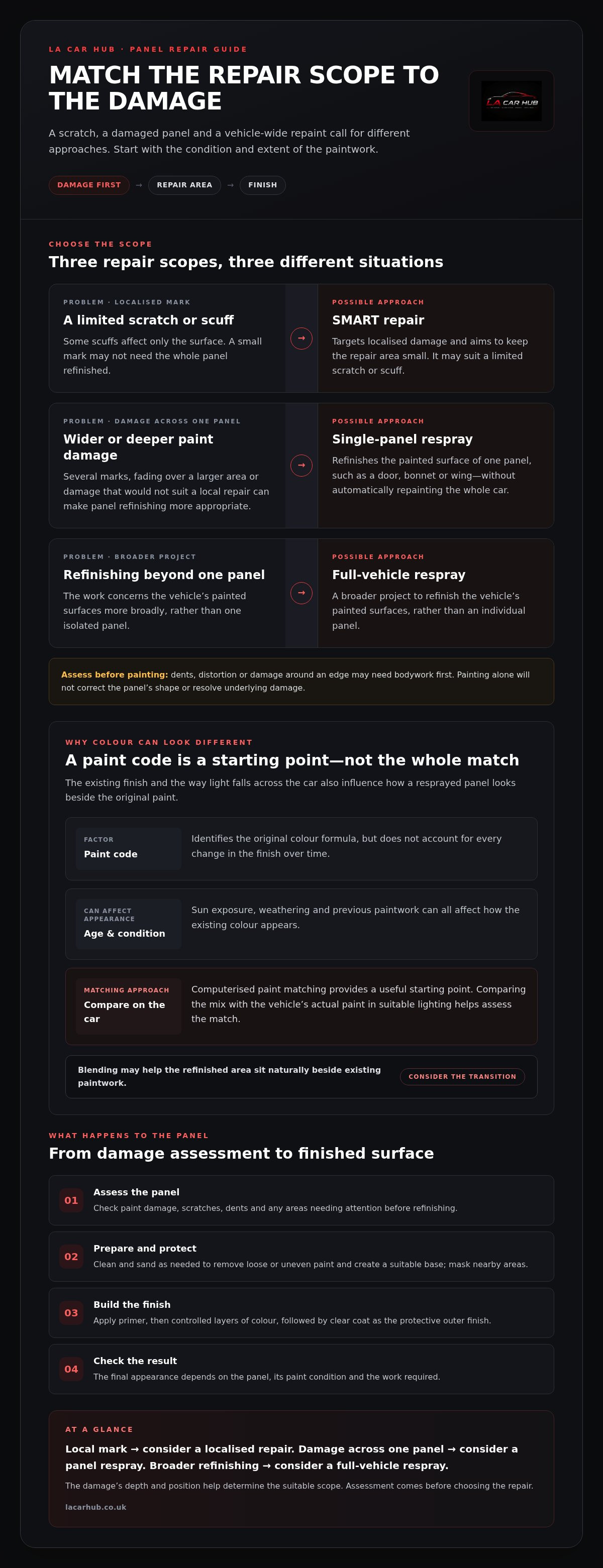
The main difference is the area being repaired. These approaches have different scopes, and the extent and location of the damage help guide which is suitable.
- SMART repair: Targets localised damage and aims to keep the repair area small. It may suit a limited scratch or scuff.
- Panel respray: Refinishes the painted surface of an individual panel. It may be suitable when damage is spread across the panel or a local repair would not give a consistent finish.
- Full-vehicle respray: Covers a broader project to refinish the vehicle’s painted surfaces, rather than one isolated panel.
These descriptions are a guide, not a substitute for assessing the damage. A scratch near a panel edge, several marks across one door or paint that has faded over a larger area may call for different repair scopes. When weighing up a panel respray Berkshire option, the aim is to match the method to the condition of the paint and panel, rather than repainting more than the job requires.
How a panel respray in Berkshire is prepared and painted
A panel respray follows a considered sequence, but the exact work depends on the panel’s condition and the type of damage. A shallow scratch needs different preparation from peeling paint or a dented panel. The aim is to prepare the surface properly before applying the new finish, rather than simply covering the visible mark.
Assessment and preparation before paint is applied
First, the panel is assessed for damaged paint, scratches, dents and any areas that need attention before refinishing. The surface is cleaned, then sanded as needed to remove loose or uneven paint and create a suitable base for the next layers. Nearby areas are masked to protect them from paint. Thorough preparation matters because flaws left on the surface can affect the appearance of the finished panel.
Applying paint and completing the finish
Once prepared, the panel can be primed. Primer provides a suitable foundation for the colour coat. The colour is applied in controlled layers, followed by clear coat, which forms the protective outer finish and contributes to the final appearance. Each layer has a different purpose, and careful application helps create an even finish across the repair area.
A dedicated spray booth provides a controlled environment for refinishing. LA Car Hub’s Reading body shop carries out spray painting in a dedicated booth, supporting a focused process from preparation through application. The booth is part of the working environment, not a promise that every repair will be invisible. The result also depends on the panel, the paint condition and the work required.
In short: assess the panel, prepare and mask it, then apply primer, colour and clear coat before checking the finish. The time needed for each stage can vary, and handling guidance depends on the work and materials used. Follow the advice provided for the specific repair rather than assuming the paint will be ready to handle after a set period.
For drivers considering a panel respray in Berkshire, knowing these stages can make it easier to discuss the work and the finish they want. LA Car Hub’s spray painting and refinishing takes place in a dedicated body-shop setting.
How colour matching and blending help a Berkshire panel respray look consistent
A close colour match is central to a good repair, but it is not the only factor in how the finished panel looks. The surrounding paint’s condition, the way light falls across the car and the transition between new and existing paintwork all affect the result. A colour that seems right on its own can look different beside an older panel.
Why a vehicle paint code is only part of the match
A vehicle’s paint code identifies its original colour formula, but it cannot account for every change in the finish over time. Sun exposure, weathering and previous paintwork may affect how the existing colour appears. Computerised paint matching provides a useful starting point, while comparing the mix with the vehicle’s actual paint in suitable lighting helps assess the match. LA Car Hub uses computerised paint matching as part of its refinishing service.
When blending adjacent panels may be considered
Blending means extending the colour application into the surrounding paintwork so the change between repaired and original areas appears more gradual. It may be considered when a direct match could leave a noticeable contrast, but it is not needed for every repair. The approach depends on the vehicle, the panel and the paint condition. The aim is a well-integrated finish, not a promise that the repair will be invisible.
Lighting matters when comparing paint. A panel can look different in bright sunlight, shade or indoor lighting, and metallic or pearlescent finishes may appear to shift as the viewing angle changes. Checking the colour in context, against adjacent paintwork, gives a more useful assessment than judging a paint sample alone.
For drivers researching panel respray berkshire options, it helps to know that matching and blending are related but distinct parts of the decision. A paint code guides colour selection; the vehicle’s current finish helps inform how that colour should be applied. If a panel sits next to a door, wing or bonnet with visibly aged paint, the surrounding surface may influence the repair plan.
There is no single blending method that suits every car. The repair scope follows an assessment of the existing paint and the area involved. Clear photos can help describe the damage, while seeing the vehicle in person allows the finish to be considered alongside neighbouring panels. This assessment helps determine how to make the respray sit naturally with the rest of the bodywork.
How to prepare for a panel respray and care for the finish
Preparing a few details before discussing a panel respray can make it easier to explain the problem and understand what the repair may involve. Clear information helps build a useful picture, though an in-person assessment can reveal things a photograph cannot, such as the depth of a scratch or the condition of the paint around it.
What information helps assess a panel respray?
Take well-lit photographs of the damage, including a close view and a wider view of the whole panel and surrounding area. This shows the mark and where it sits on the vehicle. Describe how the damage happened, where it is and whether it has changed, such as a chip beginning to peel or a scratch becoming more noticeable. Mention any previous paintwork or repairs you know about, as these can affect how the existing finish is assessed.
Photos are a helpful starting point, not a final diagnosis. An in-person inspection can clarify whether the issue is limited to the paint or whether the panel needs further repair before refinishing. If you’re comparing repair scopes or preparing to discuss a quote, see our guide to car respray cost factors.
Looking after refinished paint
After the work, follow the repairer’s specific guidance on washing, handling and caring for the refinished area. Instructions can vary with the materials and work involved, so avoid relying on a universal waiting period or applying products without checking that they are suitable for the new finish. Use the guidance provided for your repair if you are unsure about a cleaning product or care step.
Aftercare helps you look after the finish as it settles. For wider background on what happens during refinishing, read our car spray painting process guide. It offers further context alongside the advice tailored to your vehicle and repair.
If you’re considering a panel respray Berkshire drivers can discuss locally, sharing clear photos and repair history is a practical first step. Discuss your panel respray with LA Car Hub.
Getting a panel respray in Berkshire with LA Car Hub
For drivers researching panel respray berkshire options, LA Car Hub provides a local service from its Reading automotive centre. The body shop carries out spray painting and refinishing, using a dedicated spray booth and computerised paint matching as part of the work. The right repair starts with understanding the panel’s condition, because not every mark needs the same treatment.
What to expect from a local panel-respray discussion
A useful repair discussion covers which panel is affected, what the damage looks like and what finish you hope to achieve. Photos can help explain the issue, while an assessment of the vehicle helps establish the paint’s condition and whether the panel needs preparation, bodywork or refinishing. The scope is tailored to the vehicle and its existing paintwork, so timing and quote details depend on the job.
Share any known history, such as earlier repairs to the same area. This context helps inform how the current finish is considered alongside the surrounding panels. For broader guidance on vehicle repairs and what to consider, read the Reading car body shop guide.
Next steps for Berkshire drivers
Before discussing the repair, note the panel’s location and how the damage happened. Clear, well-lit photos of both the mark and the wider panel can help explain what you’re seeing. Mention previous paintwork if you know about it. These details help frame the discussion, while an in-person assessment establishes the work needed.
Preparation and colour assessment both shape the refinishing approach. At LA Car Hub, computerised paint matching supports the colour assessment, while the body shop’s spray booth provides a dedicated setting for refinishing. For panel respray berkshire work, the plan is shaped around the vehicle’s actual condition and finish, not a one-size-fits-all approach.
If you’re ready to discuss your vehicle’s paintwork, discuss panel respraying with LA Car Hub.
Take the next step towards restoring your panel
A successful panel respray starts with choosing the right scope of repair. The damage’s depth and location help determine whether the panel needs bodywork before refinishing, while careful preparation and colour assessment help the new paint sit naturally alongside the existing finish. Blending may also be considered where it can create a smoother transition.
If you’re considering a panel respray in Berkshire, LA Car Hub is a Reading-based automotive centre with a body shop for spray painting and refinishing. Its dedicated spray booth and computerised paint matching support a considered approach to panel work, with the repair shaped around the vehicle’s condition.
To discuss your vehicle’s paintwork, talk to LA Car Hub about a panel respray in Berkshire.
Frequently Asked Questions
What is a panel respray?
A panel respray is the refinishing of the painted surface of one part of a vehicle, such as a door, bonnet or wing. It may be suitable for scratches, chipped paint or a faded finish affecting that panel. The work typically involves preparing the surface before applying primer, colour and clear coat. The repair depends on the panel’s condition and whether damage beneath the paint needs attention first.
Can you respray just one car panel?
Yes, a single panel can be resprayed without refinishing the whole car. The affected area is assessed to establish whether the damage is limited to the paint or whether dents or other issues need addressing first. Colour matching and the condition of nearby paint also matter. LA Car Hub’s Reading body shop carries out spray painting and refinishing, with computerised paint matching and a dedicated spray booth.
Will a resprayed panel match the rest of my car?
A close match is the aim, but the result depends on the vehicle’s existing finish as well as its original colour. A paint code provides a useful reference, while age, weathering, previous paintwork and lighting can affect how the colour appears beside neighbouring panels. Computerised matching supports colour selection, and assessment helps determine whether blending may improve the transition. No repair can be promised to look invisible in every light.
How long does a panel respray take?
There is no set timeframe for every panel respray. The time depends on the panel’s condition, how much preparation or bodywork it needs, and the paint materials and process involved. Primer, colour and clear coat each need appropriate handling as the work progresses. An assessment gives a clearer picture of the job, and guidance can be specific to the work rather than based on a general estimate.
Is a panel respray different from a SMART repair?
Yes. A SMART repair generally targets a small, localised area of damage, such as a limited scuff or scratch. A panel respray covers the painted surface of an individual panel, which may suit damage spread more widely across it. The choice depends on the mark, its location and the existing finish. A full respray is broader, involving refinishing painted areas across the vehicle rather than just one panel.
Can scratches and dents be repaired before a panel is resprayed?
Yes, scratches and dents can be assessed before paint is applied, and the panel may need repair as part of the work. A shallow scratch may involve paint preparation, while a dent needs attention to the panel’s shape before refinishing. Deeper damage or distortion calls for a closer bodywork assessment. The repair plan depends on what lies beneath the visible mark, not only how it looks from a distance.
How should I care for my car after a panel respray?
Follow the repairer’s specific advice on washing, handling and caring for the newly refinished area. Guidance can vary with the materials and work involved, so do not assume a universal waiting period or use a product unless it is suitable for the finish. If you’re unsure about washing or applying polish, follow the instructions for your repair. This helps you care for the paint appropriately as it settles.


