
What if the best paint job for your car isn’t a full respray? If you’re searching for “spray painting car reading”, you may be weighing up a scuffed panel, more widespread damage or a colour that no longer looks its best. It’s understandable to wonder whether local paintwork will blend with the existing finish and how to compare repairers when their plans aren’t clear.
A good result starts with choosing the right scope of work, not simply applying fresh paint. This guide explains the main stages of professional automotive spray painting, what can affect the finish and what to share when requesting an assessment in Reading. You’ll also find practical questions to help you understand a repairer’s preparation, paint matching and proposed work. LA Car Hub’s Reading body shop offers individual panel painting, full resprays and computerised paint matching. The right option depends on your vehicle’s condition and the result you want, so it’s worth discussing the alternatives before deciding.
Key Takeaways
- Consider the type and extent of the damage, along with the condition of the existing paint, when discussing individual panel painting or a full respray.
- Understand the main stages of professional spray painting, from assessment and preparation to paint application and final checks.
- When comparing spray painting car reading services, look for a clear written scope covering preparation, paint matching and communication.
- Prepare for handover by photographing existing damage, removing personal belongings and agreeing which work and collection arrangements are included.
- Ask LA Car Hub about its individual panel painting, full resprays and computerised paint matching.
Spray painting a car in Reading: when is a respray the right option?
Automotive spray painting applies paint to a vehicle’s surface to restore or change its finish. Depending on the damage and the result you want, the work may focus on one panel or cover a much larger area. A professional car respray involves preparing and applying paint to a vehicle panel or wider body area as part of an assessed refinishing job.
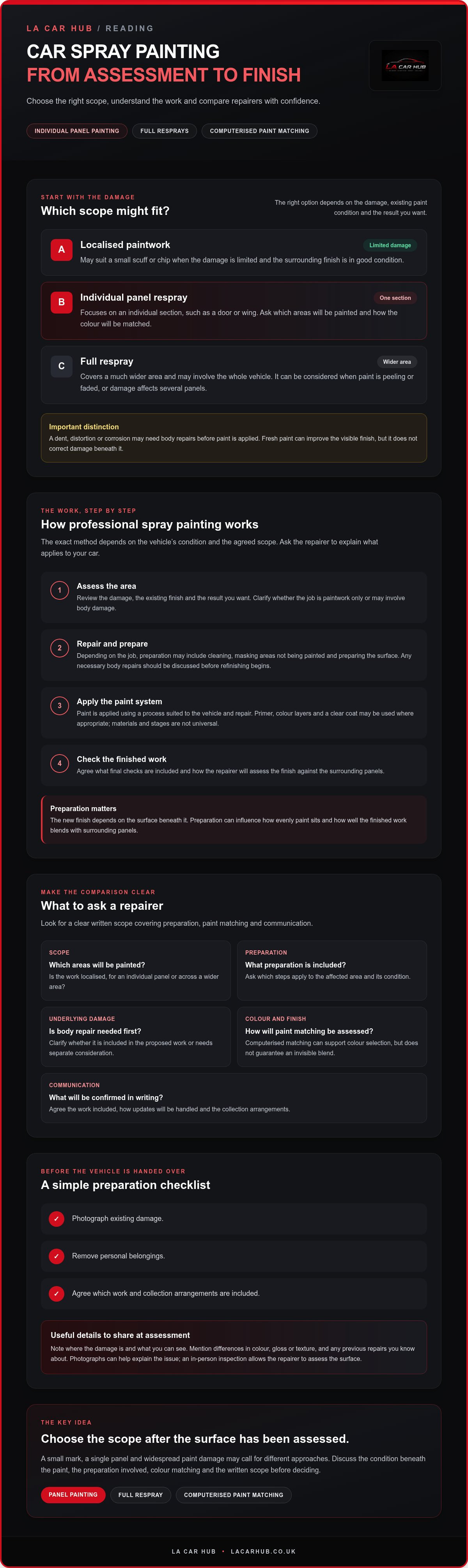
The right scope depends on more than how noticeable a mark looks. A small scuff or chip may suit localised paintwork, while peeling or faded paint, or damage across several panels, may call for broader refinishing. If a panel is dented, distorted or affected by corrosion, body repairs may be needed before paint is applied. Fresh paint can improve the visible finish, but it does not correct damage beneath it.
Paint systems and their application have developed over time. Modern automobile paint provides further background on automotive paint, its composition and use. For your decision, the practical questions are how much of the vehicle needs attention and what condition the surface underneath is in.
Panel repair, panel respray or full respray: what is the difference?
A localised repair may be suitable when the damage is limited and the surrounding finish is in good condition. A panel respray focuses on an individual section, such as a door or wing. A full respray covers a much wider area and may involve the whole vehicle. These options are not interchangeable: the visible damage, previous paintwork and result you want all help determine a sensible scope.
LA Car Hub’s Reading body shop offers individual panel painting and full resprays, as well as computerised paint matching. Matching technology can support colour selection, but it does not determine the scope of work on its own. Ask what the assessment involves, which areas will be painted and whether any body repairs may be needed first.
What should Reading drivers consider before booking?
Before discussing spray painting car reading options, note where the damage is and what you can see. Look for differences in colour, gloss or texture, and mention any previous repairs you know about, as older paintwork may affect the assessment. Clear photographs can help you explain the issue, but an in-person inspection allows a repairer to assess the surface and discuss whether paintwork alone is suitable.
For help assessing a repairer’s approach and agreeing the work, read this Reading car body shop guide. A clear discussion of the damage and proposed scope is a useful first step before deciding between a local repair, panel painting or a wider respray.
How professional car spray painting works, from assessment to finish
A professional respray involves a sequence of decisions and tasks, not simply a fresh coat over a mark. The exact method depends on the vehicle’s condition and the agreed scope, so ask the repairer to explain what applies to your car. The stages below are a useful outline, not a promise that every workshop follows an identical process.
Surface preparation is central to a respray because the new finish depends on the condition of the surface beneath it. Cleaning, repairing and preparing the affected area can influence how evenly paint sits and how well the finished work blends with surrounding panels. For broader background, GOV.UK provides professional respraying process guidance.
Assessment and preparation before paint is applied
A clear assessment establishes the scope. The repairer examines the affected area, discusses the finish you want and identifies whether the work is limited to paint or may involve body damage. A dent or other damage may need attention before refinishing can begin, so ask whether this is included in the proposed work or needs to be considered separately.
Depending on the job, preparation may involve cleaning, masking areas that are not being painted and preparing the surface. Ask which steps are included and how they relate to the damage on your vehicle, as the method can vary with the repair area and its condition.
Paint application, matching and final inspection
Once the surface is ready, paint is applied using a process suited to the vehicle and repair. Primer, colour layers and a clear coat may form part of the process where appropriate. These details are not universal, so ask the workshop which materials and stages it plans to use for your car.
Computerised paint matching can help identify a suitable colour, but it does not guarantee an invisible blend. The condition of the vehicle’s existing finish also matters. Before collection, ask what checks will be made against the agreed work, including the repaired area and its visible finish.
In practice, the process can be summarised in four stages:
- Assess: inspect the vehicle and agree the area and work required.
- Prepare: confirm how the surface will be cleaned and prepared, and whether body damage needs attention.
- Paint: apply the agreed refinishing process, using colour matching where suitable.
- Check: review the completed work against the agreed scope.
If you’re considering spray painting car reading, ask the repairer to explain each stage in relation to your vehicle. You can discuss your car’s paintwork with LA Car Hub, whose Reading body shop offers individual panel painting, full resprays and computerised paint matching.
How to compare car spray-painting services in Reading
Start a comparison with the proposed work, not a broad promise of a “perfect finish”. Ask each repairer to assess the same damage and describe in writing which areas are included, how the surface will be prepared, how colour matching will be approached and what final checks and aftercare are covered. Comparing the same details makes it easier to spot differences in scope.
Use the table as a prompt when requesting an assessment. The right answers depend on your vehicle, but a repairer should be able to explain the proposed plan in clear, practical terms.
| What to compare | Questions to ask |
|---|---|
| Agreed scope | Which panels or areas are included, and what is excluded? |
| Preparation | What preparation is included? Could dents or other body damage need attention first? |
| Paint matching | How will the colour be assessed against the existing finish? |
| Communication | How will the repairer explain the work and raise any change to the agreed scope? |
| Final checks and aftercare | What will be checked on the repaired area, and what care advice will be provided? |
For broader context on the UK framework for vehicle respraying, see the UK government guidance for vehicle respraying. It provides background information, but it is not a substitute for asking a repairer to explain the work proposed for your car.
Questions to ask a car painter before agreeing to work
Ask which panels and areas will be painted, and what is excluded. For example, clarify whether adjacent areas will be refinished or left as they are. Check what surface preparation and final inspection are included. If the paint damage is near a dent or previous repair, ask how that affects the proposed plan. Clear answers help you understand what you are agreeing to before work begins.
How to assess paint matching and examples of previous work
Where possible, view relevant completed work in good lighting and ask how closely it relates to your vehicle’s colour and type of repair. Colour can look different as the light and viewing angle change, and the condition of existing paint affects how a repair appears. Computerised matching supports colour selection, but it cannot guarantee an invisible blend.
Reviews and photographs can help you assess a repairer’s communication and past work. Treat them as one part of your decision, not proof of how your own vehicle will look. An in-person assessment and a written description of the agreed scope remain important. If you’re searching for “spray painting car reading”, comparing these practical details can help you make a more informed choice.
Preparing for a Respray and Caring for the Finish
A little preparation can make handover clearer for you and the repairer. Photograph the existing damage and any nearby marks before leaving your vehicle. Remove personal belongings, then make sure you both understand which areas are included in the work and what to expect when the car is ready for collection.
Aftercare is not identical for every paint job. The materials and process used can affect the recommendations, so follow the repairer’s specific instructions rather than relying on general advice about washing or curing times. Ask for those instructions at handover and check anything you are unsure about before caring for the new finish.
What to agree before leaving your vehicle
Confirm which panels will be repaired or painted and which will remain unchanged. If the work is limited to one area, make sure the agreed scope distinguishes it from adjacent panels and existing marks. Ask how the repairer will contact you if they find additional damage or think the work needs to change. Agree how updates will be shared and confirm the expected handover arrangements directly with the workshop. Timing depends on the individual job, so ask what applies to your vehicle rather than assuming a standard turnaround.
Photographs provide a helpful record of the vehicle’s condition before work begins. Take clear images of the damage and surrounding area, and keep them with any written description of the agreed work. This gives you a useful reference when discussing the repair or reviewing the finished job at collection.
What to check when collecting the car
Review the agreed repair areas with the workshop representative. Ask them to explain any visible variation in colour or finish, particularly where new paint meets an existing surface. Lighting and viewing angle can affect how paint appears, so raise questions at handover if something does not look as you expected.
Before driving away, ask for care instructions that match the work completed. Confirm whether there are specific recommendations for washing or looking after the finish, and ask whom to contact if you have a question afterwards. Do not assume general online guidance applies to every repair.
If the paintwork follows a collision, the wider repair scope may also be relevant. This Reading accident repair guide offers further points to consider when assessing repairers. For spray painting car reading, a clear handover discussion helps ensure you understand the agreed work and aftercare expectations. Discuss your car’s spray-painting needs with LA Car Hub.
Book Car Spray Painting in Reading with LA Car Hub
LA Car Hub’s Reading body shop offers individual panel painting, full resprays and computerised paint matching. Start by explaining the vehicle’s condition and the finish you hope to achieve. This gives the workshop a useful basis for discussing whether the work may suit localised paintwork, one panel or a broader respray. The appropriate scope can be clarified after the vehicle and its condition have been assessed.
You do not need to know the technical answer before getting in touch. Describe what you can see and what you would like addressed. If you have photographs, keep them handy when explaining the damage, and check with the team how they prefer to review them rather than assuming they can be submitted through a particular channel.
What information to include in a spray-painting enquiry
When asking about spray painting car reading, share the vehicle’s make, model and year if known. Describe the affected panel or area, the visible paint damage and any previous repair you are aware of. It is also helpful to say whether you are considering local paintwork, a panel respray or a full respray, even if you are unsure which is most suitable.
For example, you could explain that a door has a scuff and an earlier repair, or that the paint finish has changed across several panels. Keep the description factual. You do not need to diagnose the cause or decide on the repair method yourself. If you have photos, they can help you describe where the damage is and how much of the vehicle it affects.
Agreeing the right next step for your vehicle
After reviewing the vehicle and its condition, the workshop can clarify the proposed scope. Ask what preparation is included, how computerised paint matching will be used where appropriate and which areas are covered by the work description. If anything is unclear, ask for an explanation before agreeing to the work. A precise description helps everyone understand what is planned and what falls outside the agreed job.
Choosing between panel painting and a full respray can be difficult from photographs alone. A conversation and vehicle assessment can help establish what makes sense for your existing paintwork and the result you want. If you’re considering a repair, you’re welcome to Discuss your car paintwork with LA Car Hub and ask about spray painting in Reading. You do not need to have every detail decided in advance.
Take the next step towards the right finish
The right respray starts with understanding the vehicle, the damage and the finish you want. An assessment can help clarify whether individual panel painting or a full respray is more suitable. A clear description of the preparation, colour matching and agreed work also helps you understand what to expect.
If you’re considering spray painting car reading, LA Car Hub is a Reading-based automotive centre with a fully equipped body shop offering panel painting, full resprays and computerised paint matching. These are options to discuss, but the right scope depends on your car’s condition. Explain what you have noticed and ask questions about the proposed work.
Discuss your car paintwork with LA Car Hub to take the next step with a clearer understanding of your options. A straightforward conversation can help you decide how to move forward.
Frequently Asked Questions
How long does it take to spray paint a car?
The time needed depends on the repair scope, the vehicle’s condition and the process agreed with the repairer. Painting one panel differs from refinishing a larger area or the whole vehicle, and damage that needs attention before painting can affect the work involved. Ask the Reading repairer for an expected timeframe based on an assessment, and confirm how they will update you if the scope changes.
How much does car spray painting cost in Reading?
The cost depends on the area being painted, the condition of the existing finish and whether preparation or body repairs are needed. A panel respray and a full respray involve different scopes, so an estimate should relate to your vehicle rather than a general price. Ask for a written description of what is included and what work could change the estimate after assessment. LA Car Hub can discuss the suitable scope for your car.
Is a panel respray better than a full car respray?
Neither option is automatically better. The right choice depends on how much paintwork needs attention and the condition of the surrounding finish. A panel respray focuses on an individual panel, while a full respray covers a wider area or the whole vehicle. For limited damage, ask whether localised paintwork is suitable. An in-person assessment can help establish the scope that makes sense for your car.
Can a body shop match new paint to my car’s existing colour?
A body shop can use paint-matching methods to select a suitable colour, but an exact, invisible blend cannot be guaranteed. Existing paint condition, previous repairs, lighting and viewing angle can all affect how the finish appears. LA Car Hub offers computerised paint matching at its Reading body shop. Ask how matching will be assessed for your vehicle and whether the agreed work includes adjacent areas if needed.
Do I need to tell the DVLA if I change my car’s colour?
Yes. If you change your car’s colour, you need to update the vehicle’s V5C log book and notify the DVLA. Check the current GOV.UK guidance for the correct process before making the change, and make sure the vehicle details are updated once the colour has changed. This applies to a colour change, not simply repainting a panel in the car’s existing colour.
What should I check when collecting my car after a respray?
Review the agreed repair areas with the workshop representative and compare the completed work with the written scope. Ask about any visible difference in colour or finish, especially where new paint meets existing paint, and request the repairer’s care instructions. Aftercare can depend on the materials and process used, so follow the guidance provided for your vehicle rather than assuming general washing or curing advice applies.
Can spray painting repair scratches and stone chips?
Spray painting can be part of repairing scratches or stone-chip damage, but the suitable approach depends on the size, depth and location of the mark, as well as the paint and panel condition. A small area may need a different scope from damage that affects a wider section or the underlying bodywork. If you’re considering spray painting car reading, ask a repairer to assess the damage before deciding on local paintwork or a panel respray.


