
A confident promise is easy to make; clear evidence of repair quality matters more. If you’re looking for a car body shop Reading drivers can trust, it can be difficult to judge whether a repairer has the right skills for your damage, what an estimate includes or how the paint will be matched. It’s reasonable to want clear answers before handing over your keys.
This guide explains how to compare repairers on relevant bodywork expertise, examples of workmanship, communication and practical arrangements. You’ll find questions to ask about the repair scope, how unexpected work is handled and what to check before booking an assessment. Whether your vehicle needs accident repairs, panel work or paint refinishing, start by matching the job to the repairer’s capabilities. Look for specific explanations and relevant evidence, rather than relying on promises alone.
Key Takeaways
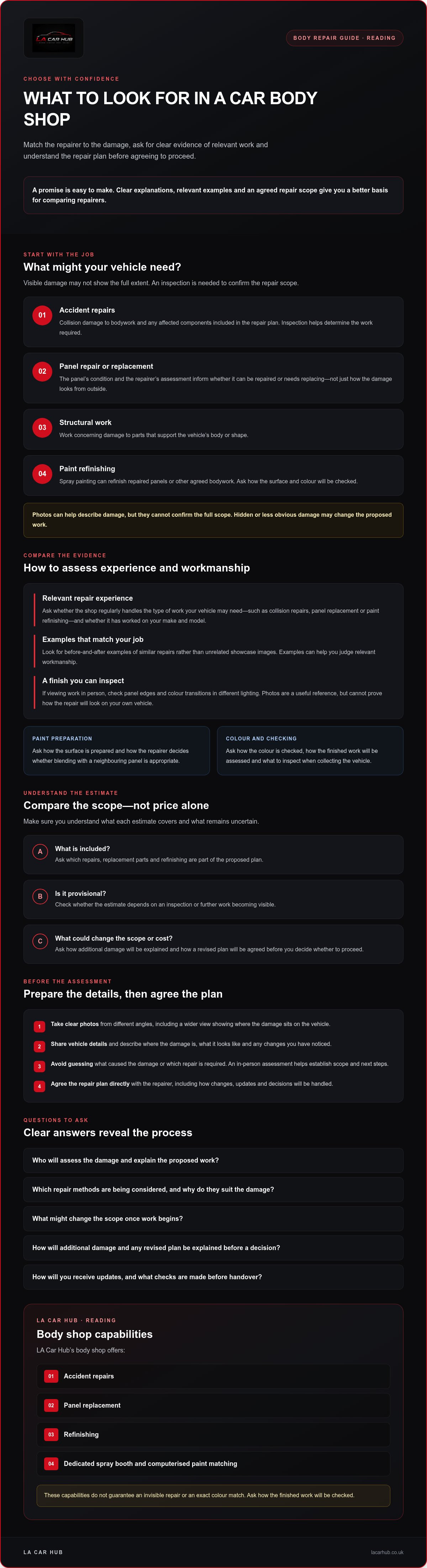
- Work out whether the visible damage may need accident repairs, panel replacement, structural work or paint refinishing. An inspection is needed to confirm the full scope.
- When comparing a car body shop Reading drivers are considering, ask about experience with your type of repair and look for relevant examples of completed work.
- Check what each estimate includes, whether it’s provisional and what could change the scope or cost.
- Prepare for an assessment with clear photos and vehicle details, then agree the repair plan directly with the repairer.
- LA Car Hub’s body shop offers accident repairs, panel replacement and refinishing, with a dedicated spray booth and computerised paint matching.
Car body shop Reading: identify the repair your vehicle needs
A dent, scrape or uneven panel can leave you unsure what to ask for. The visible mark may not show the full extent of the damage, including any issues beneath or around the affected area. A car body shop can inspect the vehicle and explain whether the work may involve repairing or replacing a panel, structural work or refinishing. Photos help you describe the damage, but they can’t confirm the full repair scope.
A car body shop repairs vehicle bodywork, restoring affected panels and refinishing them where needed. Body shops are one type of automobile repair shop, with work focused on the vehicle’s body rather than every kind of mechanical fault.
Which bodywork service might your car need?
Accident repairs address collision damage to the bodywork and any affected components included in the repair plan. Depending on the inspection, a damaged panel may be repaired or replaced. The right approach depends on the panel’s condition and the repairer’s assessment, not just how the damage looks from outside.
Structural work concerns damage to parts that support the vehicle’s body or shape. Spray painting refinishes repaired panels or other agreed bodywork. These tasks may be part of the same repair, but the repairer should explain what’s proposed and why after inspecting the vehicle.
When should a Reading driver seek an assessment?
Contact a repairer if damage affects a panel, paintwork or the vehicle’s structure, or if you’re uncertain about what you can see. Describe where the damage is and what it looks like, along with any changes you’ve noticed. Avoid assuming what caused the damage or which repair is required. An in-person assessment helps establish the scope and next steps.
For an initial discussion, take clear photos from different angles, including a wider view showing where the damage sits on the vehicle. Photos can help the repairer understand what you’re describing, but they’re supporting information rather than a substitute for inspection. Hidden or less obvious damage may change the proposed work.
If the damage followed a collision, the Accident Repair Centre Reading guide offers more detail on choosing a repairer for collision work. Ask the body shop to explain which work is proposed and what remains subject to inspection. That gives you a clearer basis for comparing repair plans before agreeing to proceed.
How to assess a Reading body shop's experience and workmanship
A repairer’s general experience is useful, but check how it relates to your job. Ask whether they regularly handle the type of work your vehicle may need, such as collision repairs, panel replacement or paint refinishing, and whether they’ve worked on your make and model. A car body shop Reading drivers are considering should be able to explain its approach in plain language, including what can be assessed now and what may only become clear during the repair.
Where available, before-and-after examples can help you judge relevant workmanship. Look for repairs similar to yours rather than relying on unrelated showcase images. If you can view the finish in person, check the panel edges and colour transition in different lighting. Photos are a useful reference, but they can’t prove how the work will look on your own vehicle.
Questions that reveal whether the repairer is a good fit
Ask who will assess the damage and explain the proposed work. Find out which repair methods are being considered, why they suit the damage and what might change the scope once work begins. Agree how the business will contact you if it discovers additional damage, and who will explain any revised plan before you decide whether to proceed.
Clear answers help you understand the process. The repairer should explain the proposed approach, what remains uncertain and how you’ll be kept informed. If a term or step isn’t clear, ask for an explanation in everyday language before making a decision.
What to look for in paint and finish work
For refinishing, ask how the repairer prepares the surface, checks the paint colour and decides whether blending with a neighbouring panel is appropriate. A dedicated spray booth provides a controlled space for spray painting, while computerised paint matching can help identify a suitable colour mix. These capabilities don’t guarantee an invisible repair or an exact match, so ask how the finished work will be checked and what to inspect when you collect the vehicle.
A well-explained repair process covers who assesses the damage, why a method is proposed, how changes are agreed, how updates are shared and what checks are made before handover. LA Car Hub’s body shop has a dedicated spray booth and computerised paint matching. You can discuss its bodywork services as you compare your options.
Compare car body shop quotes in Reading without judging on price alone
A lower estimate may cover less work, while a higher one may include parts or refinishing that another leaves out. To compare car body shop Reading quotes fairly, check what each repairer proposes, how they explain possible changes and how they’ll keep you informed. Ask for the estimate in writing so you can review the details side by side.
What should a bodywork estimate explain?
Look for a clear description of the damage assessed and the planned repair approach. Check whether panel repair, replacement parts and paint refinishing are included, listed separately or still to be confirmed. An estimate may be provisional if the repairer needs to inspect further or uncover hidden damage. Ask what could prompt a revision, how it will be explained and whether the repairer will seek your agreement before carrying out additional work.
Don’t guess at unclear line items. Ask what each one covers so you understand what you’re being asked to approve. A straightforward explanation also makes it easier to compare proposals on equal terms.
How to compare repairers fairly
Give each repairer the same information and ask the same questions. Compare the proposed scope, paintwork, communication and assessment conditions alongside the quoted price. Ask for an estimated timescale and what could affect it, rather than assuming estimates with different scopes will take the same time. If insurance is involved, check your policy and discuss any insurer arrangements separately from choosing who assesses or carries out the repair. For policy-specific questions, contact your insurer.
| Compare | Check or ask |
|---|---|
| Scope | Which panels, parts and repair tasks are included? |
| Paintwork | Is preparation and refinishing included, and are any areas excluded? |
| Updates | Who will contact you if new damage is found, and how? |
| Assessment conditions | Is the estimate provisional, and what could change it? |
| Questions | What timing is expected, and what could affect completion? |
Use the answers to identify differences, not just compare headline figures. If one estimate includes replacement parts and refinishing while another doesn’t specify them, ask for clarification before comparing totals. A repairer who explains inclusions, uncertainties and next steps gives you a better basis for deciding which proposal fits your needs.
Prepare for a body-shop assessment and agree the repair plan
A little preparation can make an assessment more useful and help you keep track of what’s been agreed. Record what you can see, gather relevant vehicle and insurance details, then contact the repairer to ask how they assess vehicles. Photos can support an initial discussion, but they can’t reveal every issue or replace an in-person inspection. If you’re contacting a car body shop Reading drivers are considering, check what information it needs and where to take the vehicle before making arrangements.
What information to bring to an assessment
Note when and how the damage happened, if known, and whether anything has changed since. Describe what you’ve noticed without trying to diagnose the cause. Have your vehicle details to hand, along with relevant insurance information if the repair may involve a claim. Before the visit, write down questions about the repair scope, updates, expected completion, collection arrangements and how newly discovered work will be handled.
For an initial conversation, take clear photos in good light. Include close views of the affected area and wider shots that show its position on the vehicle. These images help explain what you’re describing, but the full extent of the damage may only become clear during inspection.
Agree the work before repairs begin
Before authorising repairs, ask for the proposed scope to be recorded clearly. Check that you understand which work is included and what remains uncertain. If further damage is identified, agree how the repairer will explain the finding, discuss changes to the plan and seek your approval before proceeding.
Confirm practical arrangements directly with the business. Ask what to expect when handing over the vehicle, how you’ll receive progress updates and how collection will be arranged once the work is complete. Clear answers help prevent different assumptions about the repair and the process around it.
Use a simple sequence: document what you can see, gather relevant details, request an assessment, then agree the scope and communication arrangements. To discuss your requirements with LA Car Hub, ask LA Car Hub about your bodywork.
Choosing LA Car Hub for car body repairs in Reading
Once you’ve identified the damage and gathered estimates, check whether each repairer’s services fit the work your vehicle may need. LA Car Hub is a Reading automotive centre with a body shop offering accident repairs, panel replacement, structural repair, spray painting and refinishing. The repair method and scope depend on an assessment of your vehicle, so discuss the damage directly before deciding whether the business is right for your job.
Body-shop services available through LA Car Hub
LA Car Hub’s bodywork includes crash repairs, structural repair, panel replacement and bodywork restoration. Its spray-painting capabilities include a dedicated spray booth and computerised paint matching. These are facilities and tools used in the work, not a promise of a particular finish or an exact colour match.
If you’re considering a larger job, such as refinishing several panels or a full respray, ask the team whether it’s suitable for your vehicle and what the proposed work would include. Confirm which areas would be prepared and painted, how colour matching would be approached and whether repair work is needed first. A clear discussion helps distinguish what can be confirmed from what depends on inspecting the car.
Make a confident next move
Share what you’ve noticed, where the damage is and any relevant details about how it happened. Ask what information the team needs to assess it and whether photographs would help with an initial conversation. You don’t need to diagnose the damage yourself; the assessment can clarify the possible next steps.
Before arranging a visit, confirm the body-shop location and appointment process directly. Check where to take the vehicle and whether an appointment is needed. Ask for the proposed work and estimate details to be explained clearly, including what could change after inspection.
Choosing a car body shop in Reading comes down to finding a repairer whose capabilities match your needs and whose assessment makes the proposed work understandable. If you’d like to discuss your vehicle’s damage and possible next steps, talk to LA Car Hub about your repair.
Make your repair decision with confidence
Choosing a car body shop Reading drivers can rely on starts with understanding the work your vehicle may need. Ask about relevant repair experience, look for examples of similar workmanship and compare estimates by checking what each includes, not just the price. Before repairs begin, make sure the scope, any conditions and the process for discussing additional work are clear.
LA Car Hub is a Reading automotive business with a body shop offering accident repairs and panel replacement. Its dedicated spray booth and computerised paint matching are useful capabilities to discuss when considering refinishing, though the right repair plan depends on an assessment of your vehicle.
To discuss the damage and find out what details the team needs for an assessment, talk to LA Car Hub about your bodywork repair.
Frequently Asked Questions
Can I choose my own car body shop after an accident?
Often, but your options can depend on your insurance policy and the circumstances of the accident. Before authorising repairs, read your policy documents and speak to your insurer and the repairer about the process, including any assessment or approval steps. Don’t assume a recommended repairer is your only option. For more detail on choosing a repairer after a collision, see our guide to choosing an accident repair centre in Reading.
How do I choose a good car body shop in Reading?
Choose a repairer that handles the type of work your vehicle may need, then ask how it assesses damage and explains its proposed repairs. Review relevant examples of completed work where available, and clarify how updates, additional findings and estimates are handled. Compare the repair scope as well as the price, since quotes may include different work. Arrange a direct assessment rather than relying on photographs or a remote diagnosis to confirm the damage.
What does a car body shop repair?
A body shop may assess and repair collision damage, panels and paintwork, although services vary between businesses. Structural repair addresses damage to parts that support the vehicle’s body, while cosmetic refinishing deals with the visible surface and paint finish. A description or photograph can’t confirm which work your car needs. Explain what you’ve noticed and where, then check that the repairer handles the relevant work and can assess the vehicle before booking.
How long do car body repairs take?
There isn’t one standard timescale for body repairs. Timing can depend on the damage, agreed repair scope, parts availability, refinishing work and the repairer’s schedule. Ask for an estimated timescale after the vehicle has been assessed, and check what factors could affect it. Before work begins, agree how the repairer will update you if new damage is found or the plan changes, so you know how progress will be communicated.
What should a car body repair estimate include?
Look for a clear description of the proposed repair, any relevant replacement parts and the paintwork or refinishing included. The estimate should also make clear what assumptions it relies on and how additional work will be discussed. An initial assessment may not reveal concealed damage, so the final scope could change. Ask the repairer to explain unclear items and confirm how you’ll be asked to approve changes before authorising the work.
Can a body shop match my car’s paint colour?
Repairers can use paint-matching processes, including computerised systems, to help select a suitable colour. The result can depend on the existing finish, the condition of surrounding paint and the repair conditions, so an exact or invisible match shouldn’t be assumed. Ask how the shop plans to match the colour and whether it expects to blend the repaired area with neighbouring panels. A direct assessment can help clarify the approach for your vehicle.
Does LA Car Hub offer car body repairs in Reading?
Yes. LA Car Hub operates a Reading body shop offering accident repairs, panel replacement, structural repair and spray painting. Its confirmed capabilities include a dedicated spray booth and computerised paint matching. The repair method and scope depend on assessing the specific damage, so contact the business to ask whether it can assess your vehicle. Confirm the correct repair location and any appointment arrangements directly before bringing the car in.


