
What if the best upgrade isn’t the most powerful part, but the one that works safely with everything else on your car? It’s easy to focus on individual changes, yet aftermarket modifications Reading drivers choose need to suit the vehicle, work with its existing setup and make sense for everyday road use.
Before work begins, consider compatibility, roadworthiness and insurance. A modification can affect more than appearance or performance, so it pays to plan the whole package rather than choose parts one at a time. This checklist helps you set priorities for a road car and identify the checks to make before fitting starts.
We’ll cover how to define your goal, assess how proposed changes may interact and review key UK road-use requirements. You’ll also find out why it’s important to tell your insurer about modifications and when changes to a vehicle’s fundamental details may need to be recorded with the DVLA. LA Car Hub is a Reading-based automotive centre offering performance upgrades, tuning and mechanical upgrade fitting.
Key Takeaways
- For aftermarket modifications reading, begin with one clear everyday-driving goal and consider how each proposed change fits the wider plan.
- Before choosing parts, note your car’s specification, existing modifications and intended use. These details help identify potential compatibility issues.
- Consider how an upgrade could affect connected components, handling, comfort or clearance, not just the feature you want to change.
- Before work begins, review roadworthiness, MOT and insurer implications for your vehicle and proposed changes, using current UK guidance.
- Bring your goals and vehicle details to a focused workshop discussion, agree a sensible order for the work and review the result against your original aim.
Aftermarket modifications in Reading: start with the change you want
Before comparing parts or booking work, decide what you want your car to do differently. Aftermarket modifications are changes made after a vehicle leaves the factory that alter its original specification. They can change its appearance, how it handles or how it performs. Start with a clear reason for making a change, rather than a list of parts that happen to catch your eye.
This checklist is for planning modifications to a car used on the road. It isn’t a recommendation that every driver needs to upgrade their vehicle. If you’re researching aftermarket modifications reading, local options in Reading can be a useful starting point, but your car, regular journeys and priorities should guide your choices.
Modification or maintenance? A modification changes the vehicle from its original factory specification. Routine maintenance, such as servicing or replacing a worn component with an equivalent part, is generally intended to keep the car working as specified. The distinction depends on the part and work involved, so consider what is actually being changed.
Which outcome are you aiming for?
Start with the everyday issue or enthusiast goal you want to address. Is there a handling characteristic you’d like to improve, an appearance you want to personalise or a performance change you’re considering? A specific aim narrows the options and gives you a practical way to judge whether a proposed change suits the car.
Separate cosmetic changes from mechanical upgrades, then weigh each against how you use the vehicle. One driver may prioritise appearance, while another cares more about how the car responds. Neither is automatically the better choice. Think about comfort on regular journeys, practicality for passengers or luggage, and whether you mainly commute, take longer trips or drive for leisure. Performance matters, but it isn’t the only measure of a successful road-car modification.
What counts as an aftermarket modification?
The term covers a broad range of changes. Examples include altered suspension components, mechanical upgrades and cosmetic work that changes the car’s appearance. Car tuning and modifications can include both performance and visual changes, but the details of each job depend on the vehicle and parts chosen.
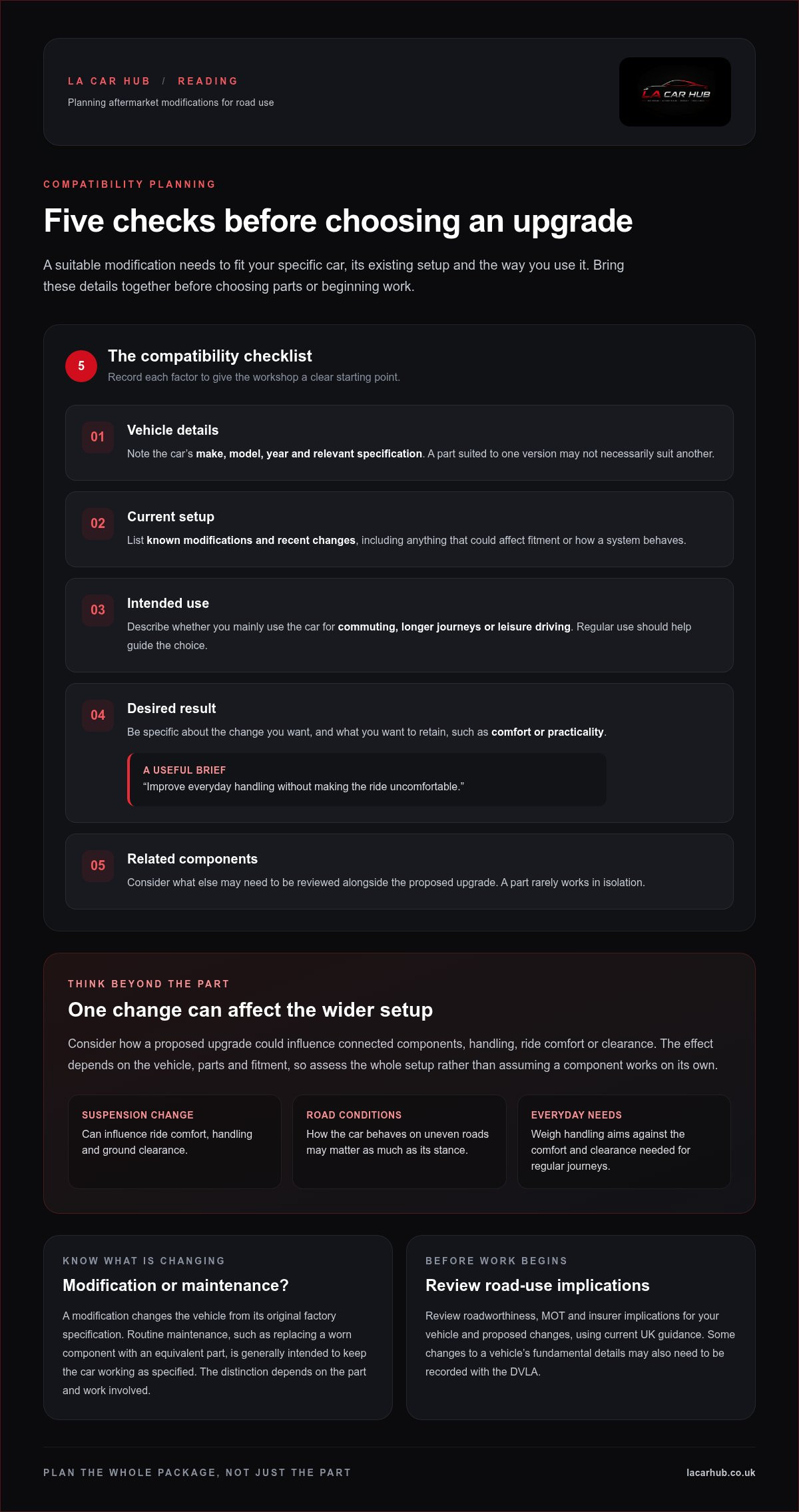
A part rarely works in isolation. Its design and fitment may affect connected components or influence handling, ride comfort and clearance. For example, a suspension change can affect more than the vehicle’s stance. How the car behaves on uneven roads may matter just as much. That doesn’t mean a particular modification is unsuitable. It means the whole setup deserves consideration before work begins.
Write down your goal in plain terms, along with any compromises you want to avoid. “Improve everyday handling without making the ride uncomfortable” is more useful than simply naming a part. That brief gives the rest of your planning a clear direction.
Check compatibility before choosing aftermarket car modifications
A modification needs to suit the specific vehicle and the way you use it. A part that appears suitable on paper may interact with existing changes or affect how the car feels on the road. Before choosing components, gather details about your car and its current setup. This gives a workshop a clear starting point for discussing fitment and related work.
Match the proposed change to the vehicle
Start with the make, model, year and current specification. Note any existing modifications, including changes that may not be obvious at a glance, and describe how you usually drive the car. Compatibility depends on both the vehicle and the proposed components, so don’t assume a part suited to one version will necessarily suit another.
- Vehicle details: Record the make, model, year and relevant specification.
- Current setup: List known modifications and recent changes that could affect fitment or how a system behaves.
- Intended use: Note whether the car is mainly used for commuting, longer journeys or leisure driving.
- Desired result: Be clear about the change you want and any comfort or practicality you want to retain.
- Related components: Consider what else may need to be reviewed alongside the proposed upgrade.
Keep this information together before discussing the work. For drivers researching aftermarket modifications reading, a clear record makes the first conversation more focused and reduces the chance of overlooking earlier changes. It also helps distinguish what’s already fitted from what you’re considering next.
Plan handling changes as a connected setup
Suspension changes can influence ride comfort, handling and ground clearance. The effect depends on the vehicle, the parts and how they’re fitted, so consider the whole setup rather than one component in isolation. For a closer introduction to this area, see our suspension upgrades guide for Reading.
Compatibility matters because each change needs to work with the car’s existing specification and your intended use. Apply that test to any proposed modification. Ask what other parts or characteristics may be affected and whether the result will still suit your regular journeys. A change aimed at sharper handling, for example, should be considered alongside the ride comfort and clearance you rely on day to day.
Some work may also have wider vehicle-record or road-use implications. If a proposed change involves the vehicle’s structure, consult UK Government guidance on structurally modified vehicles as part of your planning. The relevant considerations depend on the work involved.
Once your notes are ready, LA Car Hub’s Reading team can discuss a considered upgrade plan and mechanical fitting around your vehicle and goals. Discuss your modification plans with your car details and current setup to hand.
Roadworthiness, MOT and insurance checks for modified cars
A planned upgrade needs more than a fitment decision. Before work starts, consider how the change relates to road use, the MOT and your insurance. Requirements can depend on the vehicle, the modification and current rules, so don’t assume one general answer applies to every car. Drivers researching aftermarket modifications reading should make these checks part of the plan, not leave them until the work is complete.
Fitment, roadworthiness and insurance are separate checks, and each needs attention in its own right.
What should you check about road use and MOT?
Start with current DVSA guidance relevant to the specific change and vehicle. An MOT result is not a substitute for keeping a vehicle roadworthy between tests. Whether a modification affects an MOT inspection or its outcome depends on the vehicle, the work and the requirements in force at the time. Avoid relying on assumptions based on another car or an older test.
Use this pre-work checklist to organise your checks:
- Describe the change: Record what will be altered and which vehicle systems or components may be involved.
- Check road-use requirements: Review current DVSA and government guidance relevant to the proposed work.
- Consider the MOT: Find out whether the change could be relevant to inspection items on your vehicle. The outcome depends on the circumstances and current requirements.
- Plan for ongoing condition: Consider how the vehicle will be checked and maintained after the work, not just on the day it’s fitted.
- Keep useful records: Store details of the work and components so you can refer to them when discussing road-use or insurance questions.
These steps are a planning aid, not a substitute for checking the guidance that applies to your exact vehicle and proposed modification. Rules can change, so use up-to-date official information before work begins.
When should you tell your insurer?
Contact your insurer about modifications and follow its current policy requirements. Explain what you plan to change, then provide any details it asks for once the work is complete. Cover terms and the effect on your policy depend on the insurer, policy wording and modification, so don’t assume disclosure will lead to a particular premium or outcome.
Keep a note of what you disclosed and any response or updated policy documents. If you’re still deciding between options, ask your insurer how it wants proposed changes handled before committing to the work. This helps you understand the policy implications while there’s still time to adjust your plan.
For an upgrade plan, bring your vehicle details and proposed changes to a workshop discussion. LA Car Hub offers performance upgrades, tuning and mechanical upgrade fitting in Reading, helping drivers plan work around their vehicle and intended road use.
Use this checklist to plan modifications in a sensible order
A staged plan makes it easier to compare options and keep the work focused. Start with one clear outcome, then work through the vehicle details, practical implications and proposed scope before booking. Making unrelated changes all at once can make it harder to tell which change delivered the result you wanted or what may need adjusting.
Build a modification plan before booking work
Put your goal in writing, such as improving a particular aspect of performance or changing the car’s appearance. Add the vehicle’s make, model, year and current specification, along with any existing modifications. Then list questions for the workshop: which parts of the vehicle could be affected, what needs to be considered alongside the proposed change, and how will the completed work be reviewed?
A sensible sequence is:
- Define the goal: Choose one main outcome and note what you want to preserve, such as everyday comfort or practicality.
- Document the car: Record its current specification, existing changes and how you use it.
- Check implications: Consider compatibility, road use, MOT relevance and insurer requirements for the proposed work.
- Plan the work: Discuss how the changes fit together and agree the intended scope before work starts.
- Review the result: Compare the finished work with your original aim and note any follow-up checks or questions.
Sequencing matters because one planned change may affect how another should be approached. If you’re considering several upgrades, discuss them together so possible interactions can be considered and the work put in a practical order. LA Car Hub offers performance upgrades, tuning and mechanical upgrade fitting in Reading, giving drivers a local place to discuss a considered plan. For a closer look at comparing options, our performance upgrades guide for Reading explores how to think through different choices.
Keep a clear record of changes
Good notes make the finished setup easier to understand later. Keep a record of the work completed, relevant component details and any follow-up checks discussed. Store these with your vehicle documents and insurer communications, so you can refer to them if you review the setup, speak with your insurer or plan another change.
- Save a copy of the agreed work scope and a summary of completed work.
- Note relevant component information and any checks recommended after fitting.
- Keep dates and copies of communications with your insurer together.
- Update your own vehicle record when the setup changes again.
This simple record helps prevent future planning from starting with guesswork. If tuning is part of your plan, the car tuning guide in Reading offers more context for thinking through that type of upgrade. Discuss your modification plan with LA Car Hub and bring your vehicle details and notes along.
Aftermarket modifications with LA Car Hub in Reading
Once you’ve clarified what you want to change and considered the checks involved, a workshop conversation can help turn your notes into a practical plan. LA Car Hub is a Reading-based automotive centre offering performance upgrades and tuning, as well as mechanical upgrade fitting. Start by discussing your vehicle and priorities, then shape the proposed scope around the car and how you use it.
If you’re researching “aftermarket modifications Reading”, arrive with a clear outcome in mind, but you don’t need to have every detail decided. A focused discussion can help you explore the work you’re considering and the vehicle factors that matter before fitting begins.
What to bring to a workshop discussion
A few useful details can make the conversation more productive. Bring the car’s make, model, year and current specification, along with a record of modifications already fitted. Describe the result you’re looking for and how you use the car day to day. If you’ve already received guidance from your insurer, bring that information too, so it can be considered alongside your plans.
- Vehicle information: Make, model, year and relevant specification.
- Existing changes: Notes or records of modifications and related work.
- Your priorities: The outcome you want, plus any comfort or practical needs to retain.
- Questions: Points about compatibility, road use, proposed work or insurer requirements that you want to discuss.
It’s fine to bring questions rather than a fixed parts list. Discussing the goal first leaves room to consider how the proposed work may suit your vehicle and intended use. The scope can then be tailored to the project, rather than treating every car or driver as if they had the same needs.
From an idea to completed upgrade work
A straightforward process starts with your aims and vehicle details. From there, the discussion can cover the proposed work, relevant vehicle considerations and the scope you want to proceed with. Agreeing what’s included before work starts helps keep the project focused and gives you the chance to address compatibility questions in advance.
Depending on your priorities, the plan may centre on performance upgrades or tuning. Mechanical upgrade fitting can also form part of a considered project, while alloy refurbishment may suit a plan that includes attention to the wheels’ appearance. Discuss each change in the context of your vehicle and intended use.
Bring your notes and the questions you’ve gathered. LA Car Hub carries out modification work in Reading, including performance upgrades, tuning and mechanical upgrade fitting. Enquire with LA Car Hub about your modification project.
Take the next step with a considered plan
Turn your preferred outcome into a focused conversation, not a longer wish list. Note what you want the car to do differently, what you need to keep unchanged and what questions still need answering. That gives the discussion a practical starting point, whether you’re weighing performance, tuning or another upgrade.
If your search for aftermarket modifications reading has brought you here, LA Car Hub’s Reading team can help you discuss your plans locally. The centre offers performance upgrades and tuning, alongside mechanical upgrade fitting. Bring your vehicle details and priorities to discuss a project shaped around your car and intended use.
You don’t need to have every decision settled before you start. A clear goal is enough to begin exploring a suitable direction. Talk to LA Car Hub about your modification plans and take the next step.
Frequently Asked Questions
Do I need to tell my insurer about aftermarket modifications?
Yes, tell your insurer about modifications and follow the notification process in your policy. Do this before work begins where possible, and give accurate details of what’s changing. Even a cosmetic change or replacement wheels may matter to an insurer, depending on its terms. Keep a copy of your notification and any reply, then update the insurer if the finished work differs from the original plan.
Can aftermarket modifications affect my car’s MOT?
They can be relevant to an MOT, but the result depends on the vehicle, the work and the current test requirements. Before fitting, look up the applicable DVSA guidance and consider which parts of the car may be examined. A previous MOT pass on the same model isn’t proof that a different modified vehicle will receive the same result. Treat the MOT as a test, not a substitute for ongoing care.
Are aftermarket modifications legal for road use in the UK?
Some modifications are suitable for road use, but there isn’t one answer for every part or vehicle. The change must meet the requirements that apply to that vehicle and its use, including relevant standards for roadworthiness, emissions or noise where applicable. For aftermarket modifications in Reading, the same UK-wide rules apply as elsewhere in the country. Check current official guidance for the specific change before driving on public roads.
Can I modify a car that is still under warranty?
Possibly, but check the warranty terms before authorising any work. The provider may treat a fault differently if it considers the modification or its fitting relevant, and coverage can depend on the wording and circumstances. Ask for the position in writing, especially if the proposed change affects a related system. Keep invoices and details of the work, and don’t assume every part of the vehicle’s warranty will be affected in the same way.
Should I make several modifications at the same time?
Usually, it’s easier to assess changes in stages, particularly if you want to understand how the car responds to each one. If several related jobs are planned, discuss them together so their order and interactions can be considered before work starts. Staging unrelated changes can also make it clearer which alteration needs attention if you notice a new noise, warning light or change in driving behaviour.
What information should I prepare before discussing car modifications?
Have the registration number, make, model, year and engine or trim details to hand, along with a short record of previous work. Photos can help show existing changes or the area you want to alter. Be ready to explain how you use the car and what result you’re aiming for. If you’ve received an insurer’s requirements or warranty guidance, bring those details into the discussion too.
Can modifications affect my car’s reliability?
They can, depending on the vehicle’s condition, the components chosen, how the work is fitted and how the car is used afterwards. A change that places extra demands on connected parts may expose wear that was already present. Before upgrading, address known faults and keep up with routine servicing. After the work, pay attention to changes in sound, feel or warning lights, and have anything unexpected assessed promptly.


