
Can your insurer insist that you use its approved body shop after an accident? If you’re searching for “using own body shop after accident uk”, you can ask to use a repairer of your choice, even when your insurer recommends another garage. Before agreeing to repairs, check your policy and ask how your choice could affect your excess, courtesy car or the amount your insurer will contribute.
It’s understandable to want control over who works on your car while avoiding unexpected bills or delays. Before authorising any work, ask your insurer to confirm in writing whether your chosen repairer is acceptable, what it will pay, whether any extra excess applies and who will settle the repair invoice. Make sure the repairer also understands the insurer’s assessment and authorisation process.
This guide explains how choosing your own body shop can work, what to check with your insurer and how to arrange repairs. For drivers in Reading, LA Car Hub is a local body shop to contact with questions about accident repairs before work begins.
Key Takeaways
- Using your own body shop after an accident in the UK can be an option to explore, but check your policy and get your insurer’s position in writing before authorising repairs.
- Ask whether choosing a repairer outside the insurer’s network affects your excess, courtesy-car provision, repair guarantee or the amount it will contribute.
- Report the accident, photograph the damage and keep claim references and correspondence together while you agree the repair process.
- Confirm who will pay the repairer and what assessment or authorisation is needed before work starts.
- In Reading, LA Car Hub’s body shop handles crash repairs, structural repairs, panel replacement and spray painting. Ask about the repair process before proceeding.
Using your own body shop after an accident in the UK: what repairer choice means
You can ask your insurer about using a body shop you choose. That does not automatically mean the insurer has approved the repair, agreed to cover the full bill or confirmed how the claim will be handled. Before booking work, establish what your policy allows and what the insurer needs from you.
What does choosing your own accident repairer involve?
Naming your preferred repairer is different from authorising repairs. Tell your insurer which body shop you’d like to use, then ask what assessment, estimate or approval is required. Wait for the insurer’s response before agreeing to work, so you know who is responsible for the costs.
An insurer may offer a nominated repairer as part of its claims process. The insurer may coordinate the assessment and repairs through that garage under its own procedures. The details depend on your claim and policy.
An insurer-approved repairer is a garage included in an insurer’s repair network, where the insurer has such a network. The term describes the garage’s relationship with that insurer. It does not, by itself, tell you whether another repairer can work on your car under your claim.
Repairer choice and claim approval are separate questions. For example, a driver with Comprehensive Cover may be claiming for damage to their own vehicle, but the policy wording and circumstances of the accident still matter. Check what your cover says before assuming a particular repair will be funded.
Can your insurer make you use its approved repairer?
Ask before assuming that a recommendation is a requirement. An insurer may encourage you to use its nominated repairer, but what happens if you choose another body shop depends on your policy and the circumstances of your claim. A recommendation alone does not confirm the conditions for using a different garage.
Read the policy wording, including sections on repairs, claims and excesses. If anything is unclear, ask your insurer how choosing your own repairer could affect the claim. Get its answer in writing before committing. In particular, confirm whether the insurer needs to inspect the vehicle or approve an estimate first, and whether it will contribute to the repair bill.
If you’re researching using own body shop after accident uk, keep the next step simple: tell the insurer which repairer you prefer, ask what it will accept and wait for clear confirmation before work begins. This helps you compare your options without confusing the insurer’s claims process with the repairer’s workmanship.
How your policy, excess and claim process affect your choice of body shop
Your policy can shape what happens if you choose a repairer outside your insurer’s network. Terms vary between UK motor policies, so check your own wording rather than relying on another driver’s experience. A different repairer may affect how the claim is assessed or which benefits apply, but don’t assume a particular condition applies to your cover.
Which policy details should you check first?
Look for sections on approved repairers, excesses, courtesy cars and repair guarantees. Ask your insurer whether using a different body shop changes any of these benefits or means you need to follow a different claims process. Get a specific answer for your policy in writing, especially if the wording is unclear.
A courtesy car or guarantee may be linked to using the insurer’s nominated repairer, but this depends on the policy. Check what applies to your claim before deciding. The Financial Ombudsman Service guidance on vehicle repairs is also useful if you need to understand how repair quality, delays or costs can become part of an insurance complaint.
Who agrees the repair and settles the invoice?
Before work starts, establish who must authorise the repair, who pays the body shop and whether you’ll need to pay the repairer directly. Ask how the initial estimate will be reviewed and what happens if dismantling reveals additional damage. Confirm who can approve supplementary work and whether the car must be inspected again before repairs continue.
Get written agreement on repair authorisation, payment arrangements and approval for extra work before repairs begin. This helps prevent misunderstandings if the final repair differs from the first estimate.
| Point to check | Insurer-arranged repair | Repairer you choose |
|---|---|---|
| Authorisation | Ask how the insurer coordinates assessment and approval. | Confirm whether the insurer must approve the estimate before work starts. |
| Payment | Check whether the insurer pays the repairer and what excess you owe. | Ask whether you pay the repairer or the insurer settles the invoice, and whether any contribution is capped. |
| Benefits and follow-up | Check what your policy says about a courtesy car or repair guarantee. | Ask whether choosing this repairer changes those benefits or how concerns are handled. |
This table is a guide to questions worth asking, not a description of terms that apply to every policy. If you’re considering your own body shop, you can ask LA Car Hub about accident repair assessment and the repair process before authorising work. Confirm the payment arrangements for your circumstances with both the insurer and the repairer.
The main concern: will using your own body shop create extra costs or delays?
Choosing a repairer outside your insurer’s network does not automatically invalidate every insurance claim. It can, however, change how a repair is assessed, authorised or paid for. The insurer still needs to consider your claim under your policy and the circumstances of the accident, so get its position before committing to work.
You may prefer a repairer you know or trust because you value clear communication or have confidence in its workmanship. But choosing independently does not guarantee a lower bill or a quicker repair. The insurer may set conditions for contributing to the cost, and the repairer may need to coordinate estimates and approvals with the claims team. The CMA investigation into the car insurance market provides background on competition in private motor insurance, but it does not decide what an individual policy covers.
Could choosing your own repairer affect your excess or benefits?
It might, depending on your policy and the insurer’s response to your specific claim. Before deciding, ask whether your excess changes, whether a courtesy car is available and whether a repair guarantee applies to work carried out by your chosen body shop. These are points to check, not outcomes that apply to every policy.
Ask the insurer to set out any limits on its contribution to the repair cost. If you could be responsible for a shortfall, find out how that amount would be calculated before authorising work. Keep the reply with your claim documents.
Could a non-network repair take longer?
There is no automatic timetable for either route. The time needed can depend on when the damage is assessed, how quickly the insurer authorises the work, whether parts are available and whether more damage is found during repairs. An additional approval step may affect progress, but it does not mean a chosen repairer will necessarily be slower.
Agree who will contact whom. Ask the insurer whether it will deal directly with the body shop, and ask the repairer how it will handle the estimate, newly identified damage and requests for supplementary approval. If a part or decision is holding things up, make sure you know who will update you and how to follow up.
For anyone weighing up using own body shop after accident uk, compare confirmed details rather than assumptions. Get the likely costs you may be responsible for, the authorisation steps and the communication arrangements in writing before work begins.
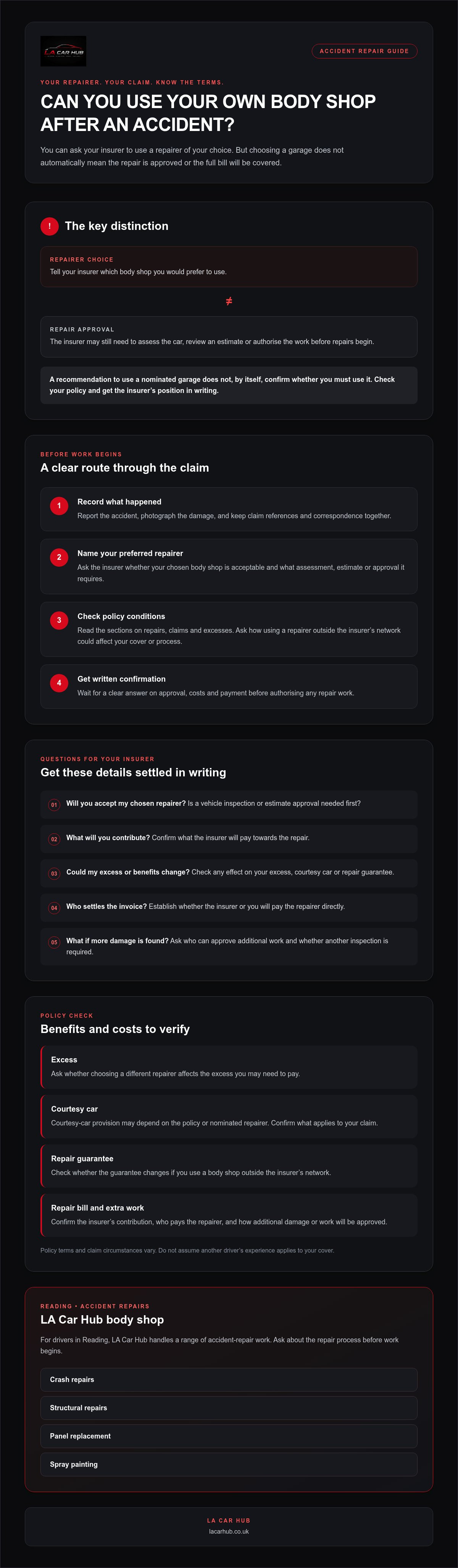
Before authorising your own bodyshop after an accident
A clear sequence can help keep the claim and repair arrangements on track. If you’re considering using your own body shop after an accident in the UK, separate reporting the incident from agreeing to have the car repaired. Asking a repairer for an estimate does not mean you have authorised the work.
- 1. Report the accident. Contact your insurer and follow its instructions for making a claim. Note the claim reference and ask what it needs before the car is assessed or repaired.
- 2. Record the damage. Take clear photographs from several angles, including close-ups and wider views showing where the damage is on the vehicle. Keep these with the claim reference, emails, letters and notes of calls.
- 3. Ask your insurer about your choice. Check whether your policy allows you to use your preferred repairer and what conditions apply. Ask about any effect on your excess, courtesy-car arrangements, repair guarantee or payment process.
- 4. Find out how approval works. Confirm who will assess the car, who must authorise the repair and how additional damage discovered during the work will be reviewed. Ask the insurer to confirm its position in writing.
- 5. Get the repair details in writing. Ask the body shop for an estimate and explain that the work is part of an insurance claim. Confirm how it will communicate with the insurer, provide updates and seek approval for any changes to the agreed work.
- 6. Agree the process before work starts. Check who pays the repairer, whether you may have to pay any amount yourself and what happens if the insurer’s approved contribution differs from the estimate.
Questions to ask your insurer and body shop
Be specific. Ask the insurer: “Can I use this repairer under my policy? What will I need to pay? Is a courtesy car or repair guarantee affected? Who approves extra damage, and how?” Request written answers that relate to your claim rather than relying on general guidance.
Ask the body shop whether it can prepare an estimate and communicate with your insurer. Agree how you’ll receive progress updates and how approval will be handled if the repair scope changes. For drivers in Reading, compare repair processes and how clearly each garage communicates. Confirm directly with your insurer before describing a garage as insurer-approved.
Don’t let repair work begin until you’ve confirmed all required insurer authorisations, the estimate and the payment arrangements. If you’re in Reading, you can ask LA Car Hub about accident repairs and the repair process before deciding how to proceed.
LA Car Hub: the next step for accident repairs in Reading
LA Car Hub is a Reading-based automotive centre with a body shop for accident-related work. Its services include crash repairs, structural repairs, panel replacement and spray painting. If you’re considering a repairer outside your insurer’s network, speaking with a local body shop can help you understand the proposed repair process before deciding what to do next.
What to discuss when asking about accident repairs
Give the repairer a clear picture of the damage and explain where you are in the claims process. For example, say whether you’ve reported the accident, whether the insurer has inspected the vehicle and whether you have instructions or requirements from the claims team. This gives the repairer context without assuming the insurer will approve that repairer or cover a specific repair.
Ask how the body shop handles an assessment and estimate, and whether it can communicate with your insurer about the proposed work. You can also ask what happens if further damage is identified during repairs, and how additional work would be discussed and authorised. Keep the insurer involved and confirm its approval and payment arrangements directly before authorising repairs.
These questions are useful wherever you’re based, particularly if you want to speak directly with a repairer. In Reading, compare the proposed repair process, the clarity of updates and how questions will be handled. Don’t treat a garage’s description or an informal conversation as confirmation that it belongs to your insurer’s network.
Arrange a repair conversation in Reading
A first enquiry does not commit you to proceeding. It gives you a chance to explain the vehicle damage, ask what an assessment involves and compare the repairer’s proposed process with the conditions your insurer has set out. If you’re researching using own body shop after accident uk, keep the insurer’s written response and the repairer’s estimate to hand as you weigh up your options.
Before agreeing to work, confirm who will pay the repairer, what costs may fall to you and whether the insurer requires any further assessment or authorisation. These details depend on your policy and claim, so check them directly rather than relying on assumptions or a general explanation.
If you’d like to discuss the damage and repair process, contact LA Car Hub in Reading for a conversation about your vehicle and possible next steps. You can ask questions first, then decide how you’d like to proceed.
Make your repair choice with confidence
Choosing your own repairer can be an option, but your policy and claim circumstances shape how it works. If you’re considering using your own body shop after an accident in the UK, ask your insurer in writing about any conditions, excess changes, benefits and required authorisations. Then confirm the estimate, payment arrangements and process for approving extra work with the repairer.
LA Car Hub is a Reading-based body shop offering crash repairs, structural repairs and panel replacement. Repair invoices may be settled directly by owners or billed through major UK motor insurance providers, but check the current process and your insurer’s position before authorising repairs. LA Car Hub is not being presented as an insurer-approved repairer, and your insurer’s response will depend on your policy and claim.
If you’d like to talk through the damage and possible next steps, talk to LA Car Hub about accident repairs. Contact the Reading team to discuss your vehicle and decide how you’d like to proceed.
Frequently Asked Questions
Can I choose my own body shop after a car accident in the UK?
In many cases, you can ask to use a body shop you choose, but your policy and claim circumstances determine the process. If you’re researching “using own body shop after accident uk”, contact your insurer before booking repairs. Ask whether it needs to inspect the vehicle or approve an estimate, and whether choosing your repairer affects your excess, courtesy-car cover or repair guarantee. Keep its response in writing.
Can my insurer force me to use an approved repairer?
There isn’t a reliable blanket yes or no, as policy terms and claim circumstances matter. An insurer may recommend a repairer in its network or set conditions that affect your benefits or claim process if you choose another garage. Ask the insurer to identify the relevant policy wording and explain the consequences in writing. If you’re still unsure, seek independent guidance before agreeing to repairs.
Will using my own body shop affect my car insurance claim?
It may change how repairs are assessed, authorised or paid for, but choosing a repairer doesn’t by itself determine whether your claim will be accepted. Notify your insurer and ask what it needs before work begins. Check any policy conditions on excesses, courtesy cars and repair guarantees. Also ask who must approve additional work if the repairer finds damage that wasn’t visible at first.
Do I have to tell my insurer which body shop I am using?
Contact your insurer before arranging repairs, even if you already have a preferred body shop. It may need to inspect the vehicle, review an estimate or explain policy conditions before work starts. Give it the repairer’s details and ask what information it requires. Keep the claim reference, estimates and written decisions together, so you and the repairer can refer to the same instructions.
Can I use a local body shop if it is not insurer-approved?
You can ask your insurer about using a local repairer outside its network, but confirm the process before booking work. Ask how the damage will be assessed, whether the estimate needs approval and who will pay the invoice. Check any policy-specific effects on benefits or guarantees. In Reading, LA Car Hub provides accident repairs, but confirm your insurer’s requirements directly rather than assuming network approval.
Who pays if I use my own accident repairer?
Payment arrangements depend on your policy, the claim decision and what you agree with the repairer. Don’t assume the insurer will pay the garage directly, or that you’ll need to pay first. Confirm who settles the invoice, how your excess is handled and whether any amount could be your responsibility. LA Car Hub says invoices may be settled by owners or billed through major UK motor insurers, but check its current process.
Should I wait for insurer approval before repairs begin?
Yes, first ask whether your insurer requires an inspection, estimate approval or other authorisation before work starts. Beginning repairs too soon could complicate its assessment or payment process, especially if further damage is discovered. Ask what evidence it needs and how additional work must be approved. Have the repairer document the estimate and any changes, and keep written confirmation of the agreed steps before authorising the repair.

